
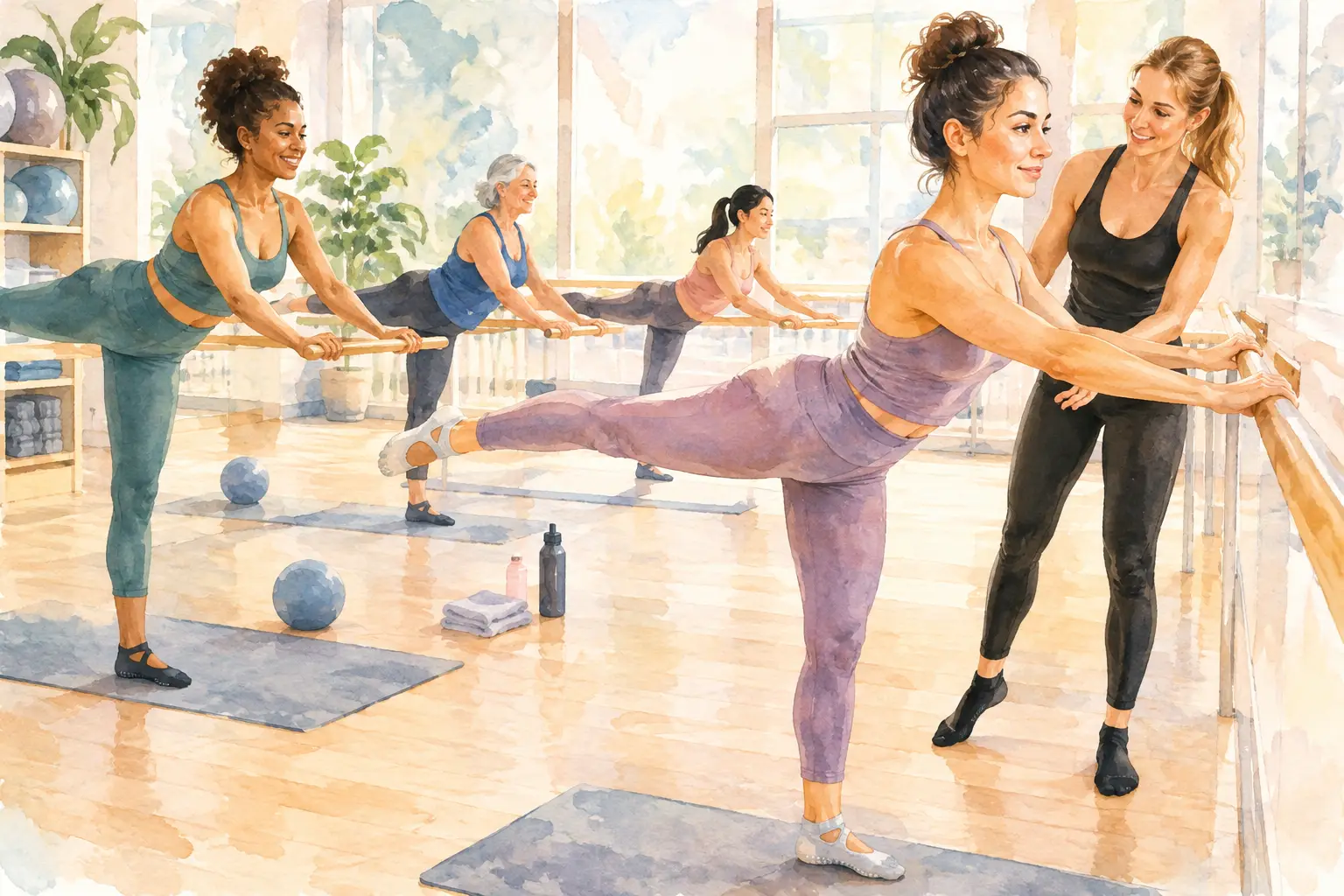
Are Barre Socks Necessary for Every Class?
Are barre socks necessary? Learn when grip socks help with stability and hygiene, when they are required, and how to choose a comfortable pair for class.
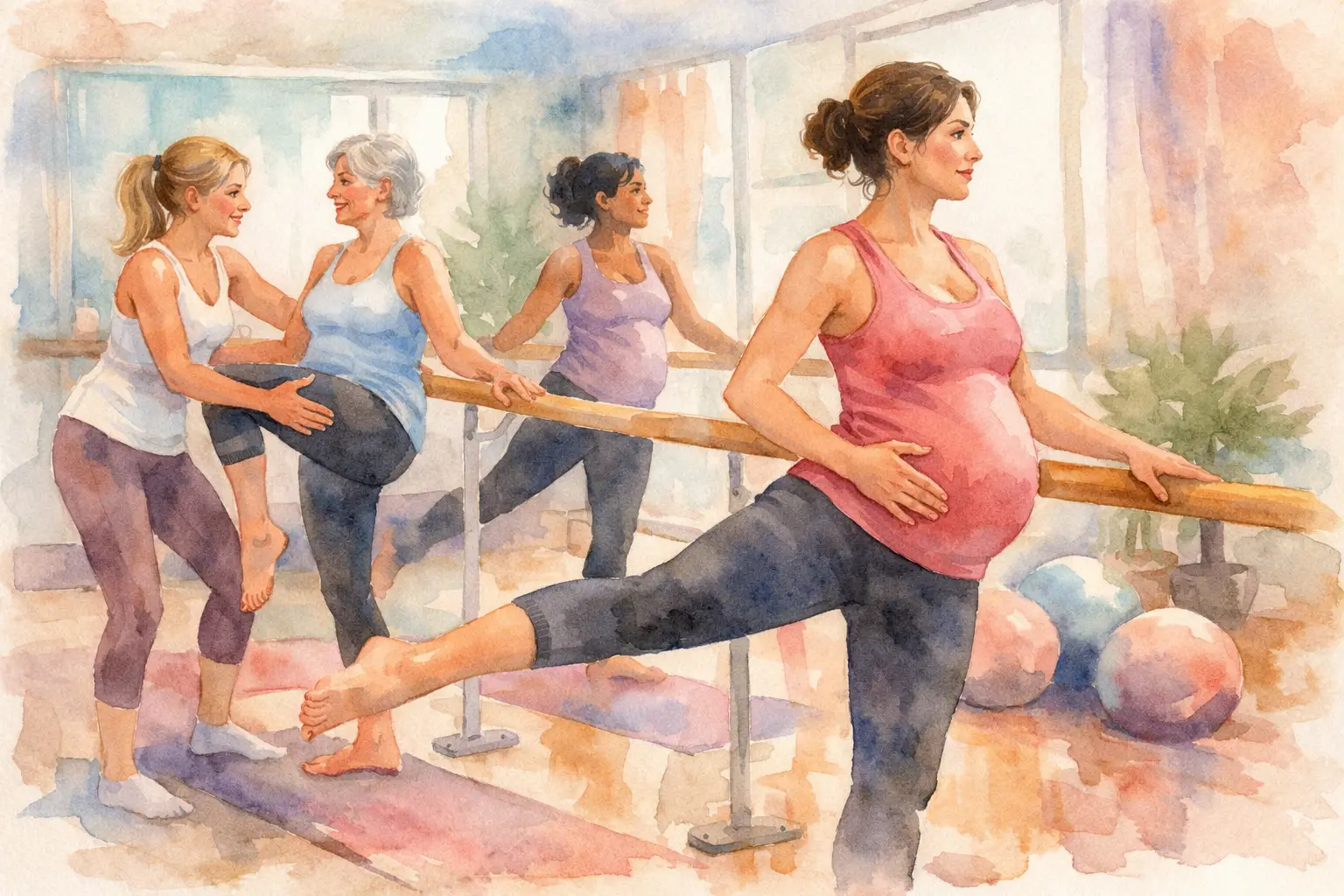
A growing belly can change how a familiar plié feels long before it changes your desire to move. Barre pregnancy safety is not about putting your fitness routine on pause or proving you can keep up exactly as before. It is about adjusting with intention, listening closely, and choosing movement that helps you feel steady, strong, and supported through each stage.
For many people with uncomplicated pregnancies who have been cleared for exercise by their prenatal care provider, barre can remain a rewarding, low-impact part of the week. The barre gives you a reliable point of contact, the pace invites focus, and thoughtful modifications can help you keep building strength, mobility, posture awareness, and confidence as your body changes.
A pregnancy-friendly barre class should never feel like a test of endurance. The goal is not to work through discomfort, chase the deepest range of motion, or hold your breath to finish a set. It is to move with control and leave feeling better connected to your body.
The biggest shift is often in your approach. Some days, you may feel energized and ready for a full class with a few adjustments. Other days, a shorter range, more breaks, and extra support at the barre may be the smartest choice. Both are valid ways to show up.
Tell your instructor that you are pregnant before class begins, even if they already know. Pregnancy is not one-size-fits-all, and how you feel can change from week to week. A coach can offer options for your stance, balance work, core exercises, and transitions so you are not trying to make those decisions in the middle of a sequence.
At Sea Barre Fitness, that coach-led support is part of the experience. You should feel comfortable taking a modification, using the barre for balance, or pausing for water without feeling like you are stepping outside the class.
Before continuing or beginning a barre routine during pregnancy, talk with your prenatal care provider. They know your health history and can help you understand what is appropriate for you. This is especially valuable if you are new to structured exercise, returning after time away, carrying multiples, or managing symptoms that affect your activity plan.
If you already attended barre before pregnancy, your body may be familiar with the movements, but familiar does not always mean unchanged. Pregnancy affects balance, energy, breathing, and joint stability. The best plan is usually to keep the movements you enjoy while changing the range, pace, position, or resistance as needed.
If barre is new to you, begin with a beginner-friendly mindset. Stand near the barre, take the setup seriously, and let your instructor know you would like extra guidance. There is no prize for taking the advanced option. Consistent, comfortable movement is far more valuable than pushing beyond what feels right.
As pregnancy progresses, your center of gravity shifts. Moves that once felt automatic, such as standing on one leg or transitioning quickly from the floor to standing, may require more attention. Keep one or both hands on the barre whenever balance feels uncertain. A wider stance can also create more room for your belly and help you feel grounded in squats, lunges, and lower-body work.
Barre is known for precise, small movements, but pregnancy is not the time to force a deeper plié or a bigger leg lift. Work in a range that feels stable and controlled. Your knees and toes should track comfortably, and your pelvis should not feel strained or tucked under aggressively.
Use the barre, a chair, or a wall for support during balance-focused work. This is not “making it easier.” It is a smart way to keep the focus on strength and alignment when your body is adapting quickly.
Your core still matters during pregnancy, but the goal shifts toward breath, posture, and deep abdominal support rather than intense abdominal work. Exercises that create bulging, coning, doming, pain, or a feeling of pressure through the midline are a sign to stop and ask for another option.
Your instructor may offer standing core work, side-lying positions, elevated upper-body exercises, or gentle breath-led engagement in place of traditional crunches and long plank holds. These changes can help you stay connected to your core without asking your body to brace in a way that does not feel supportive.
As pregnancy advances, prolonged time lying flat on your back may not feel comfortable for everyone. Some people notice dizziness, nausea, shortness of breath, or a general sense that the position is not working for them. If that happens, change positions right away and let your instructor know.
An incline, side-lying variation, seated position, or standing alternative can often keep the purpose of the exercise while making it more comfortable. The same goes for getting up and down from the floor: move slowly, use the barre or a wall if available, and take your time.
One of the simplest barre pregnancy safety habits is also one of the most useful: do not hold your breath. Exhale through effort, especially during pulses, leg work, and strength sequences. If you cannot speak a short sentence or your breathing feels strained, ease back.
Pregnancy can make you feel warmer and more winded sooner than usual. Wear breathable layers, bring water, and choose a spot with good airflow when possible. A few extra breaks do not interrupt your workout. They support it.
A familiar muscle burn in your thighs or glutes is different from pain, dizziness, or a sense that something is off. Your body gives useful information, and barre works best in pregnancy when you respond to it early rather than trying to push past it.
Stop exercising and contact your prenatal care provider promptly if you experience warning signs such as vaginal bleeding, fluid leakage, chest pain, faintness, severe shortness of breath, painful contractions, calf pain or swelling, or unusual symptoms that concern you. This is not a complete medical list, so follow the guidance your care team has given you and trust yourself when something does not feel right.
It is also normal for your energy to vary. First-trimester fatigue may make a 45-minute class feel longer than expected. Later in pregnancy, hip tightness, pelvic heaviness, or balance changes may shape which movements feel good. Let your class be responsive rather than rigid.
Arrive a few minutes early so you can speak with your instructor without rushing. Mention how far along you are, whether you have any provider-recommended restrictions, and whether you have noticed any movements that no longer feel comfortable. Clear communication gives your instructor the information needed to coach you well.
During class, set up where you can easily see the instructor and access the barre. Keep water nearby. Wear footwear that helps you feel secure, whether that means grippy socks or bare feet if the class format allows. Focus on tall posture, relaxed shoulders, and steady breathing instead of trying to match every repetition around you.
You can also think of class as practice for daily life. Supported squats can build awareness for sitting and standing with control. Posture work can counter some of the rounded, forward position that may develop as your body changes. Gentle strength and mobility can offer a meaningful moment to reconnect with yourself in a busy season.
The most supportive barre routine may look different from one trimester to the next, and it may look different from person to person. That is not a loss of fitness. It is an opportunity to practice body awareness, make confident choices, and stay connected to movement in a way that respects where you are now.
Come to the barre ready to move, but leave room for your body to lead. A thoughtful modification, a slower transition, or an early rest can be exactly what makes your practice feel strong, sustainable, and truly yours.
Are barre socks necessary? Learn when grip socks help with stability and hygiene, when they are required, and how to choose a comfortable pair for class.
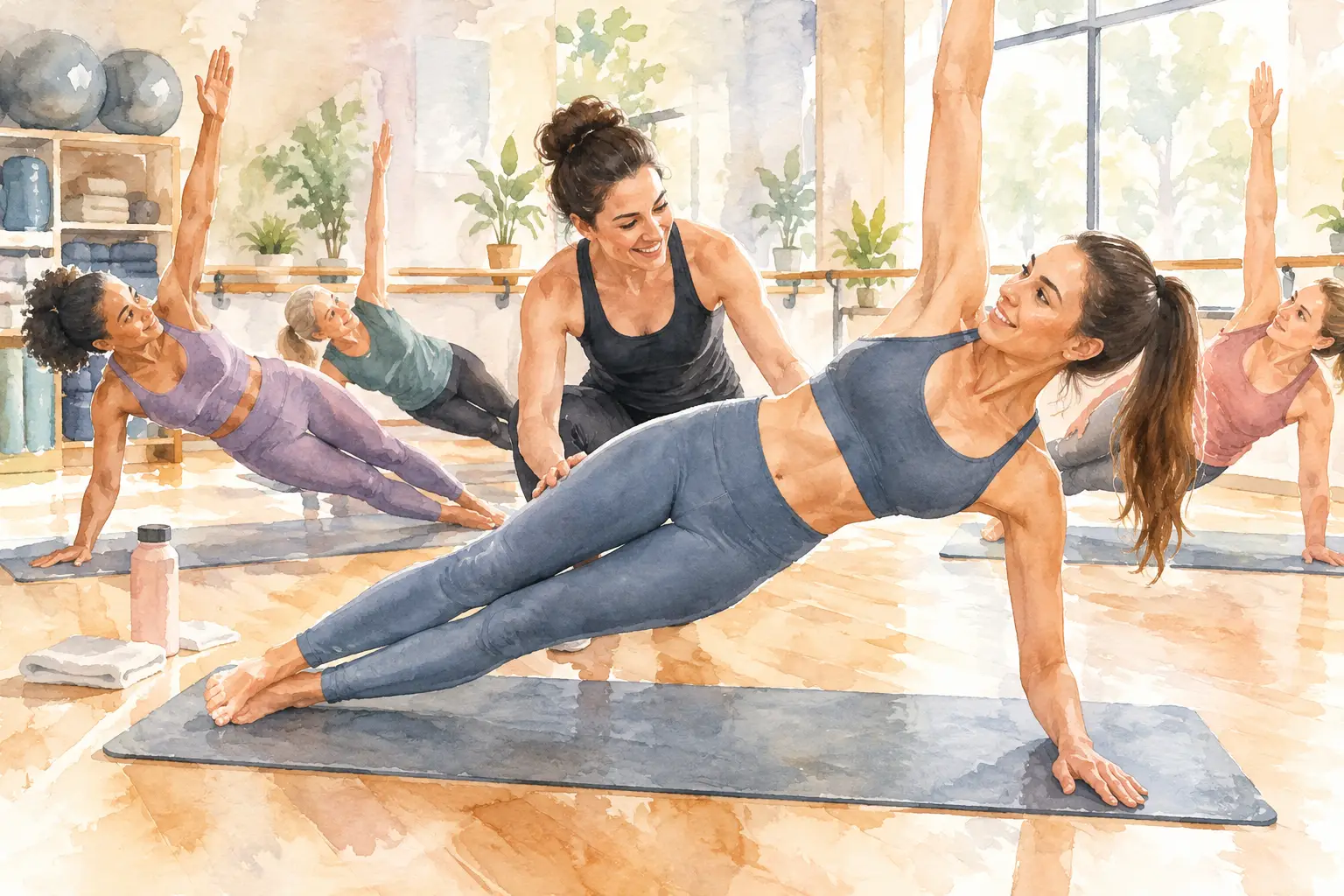
Find the best core stability moves for stronger posture, better balance, and confident low-impact movement, with form tips for every fitness level at home.