
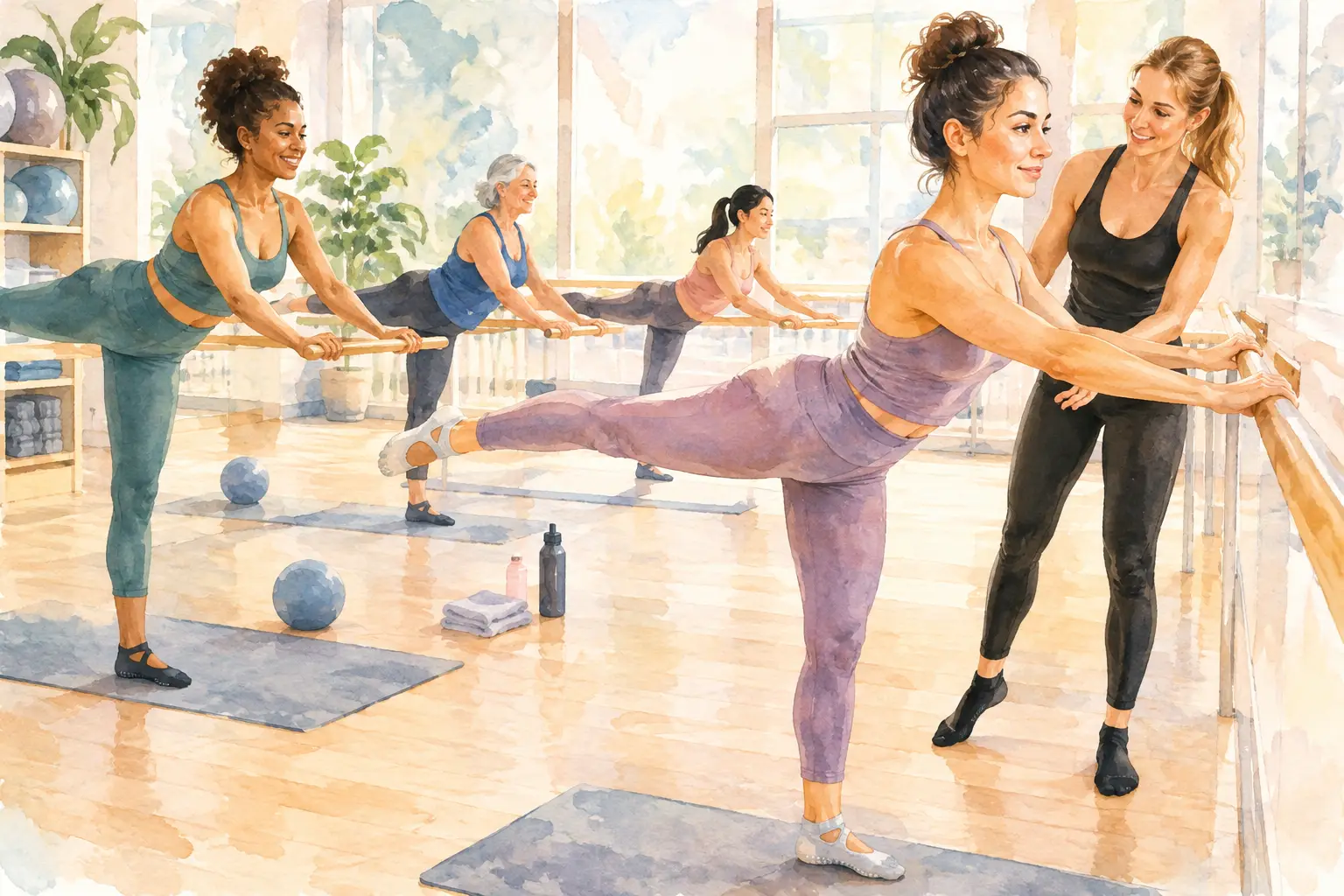
Are Barre Socks Necessary for Every Class?
Are barre socks necessary? Learn when grip socks help with stability and hygiene, when they are required, and how to choose a comfortable pair for class.
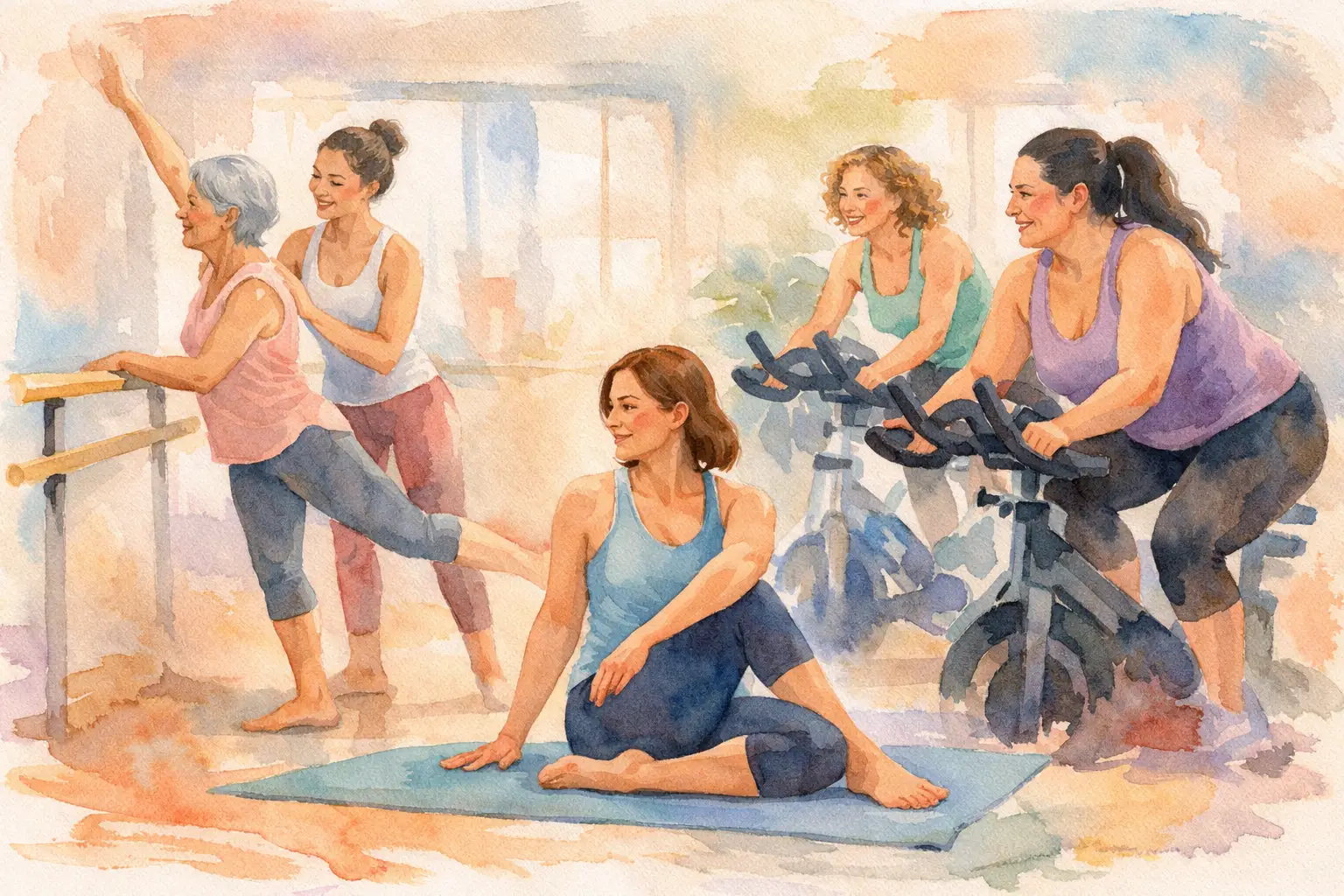
Your posture shows up long before you think about it: when you reach for the coffee pot, settle into your car, stand in line at the grocery store, or walk into class after a long day. Learning how to improve posture is less about forcing yourself to sit perfectly straight and more about giving your body the strength, mobility, and awareness to move well throughout real life.
That is good news if reminders to “sit up straight” have never stuck. Posture is not one rigid position you need to hold all day. It is your ability to comfortably change positions, support yourself against gravity, and return to a balanced alignment after the moments when life pulls you forward.
A strong posture does not mean pulling your shoulders as far back as possible, tucking your pelvis under, and staying frozen there. In fact, holding any position for too long can leave your body feeling tired and stiff.
Think of helpful alignment as stacked and supported: your ears generally over your shoulders, shoulders relaxed over your ribs, ribs over your hips, and weight shared through both feet when you are standing. Your natural curves are allowed to be there. The goal is not to look military-straight. The goal is to feel grounded, open, and able to breathe freely.
Your best posture will also change depending on what you are doing. The position that works for a desk chair is different from the position that supports you during a squat, a bike ride, or a yoga balance. The common thread is control, not perfection.
Posture improves when the muscles around your core, hips, upper back, and shoulders learn to work together. This is why a well-rounded low-impact routine can make such a difference. You are not relying on willpower alone to keep your head lifted or your shoulders from rounding forward. You are building support from the inside out.
Your core is more than your abs. It includes the muscles that help stabilize your trunk as you twist, bend, stand, and move. When those muscles are not doing their share, your neck, shoulders, or low back may try to take over.
Start with breath. While lying on your back or sitting tall, inhale slowly into your rib cage. As you exhale, gently draw your lower belly in as if you are fastening a snug pair of jeans. Keep your jaw, shoulders, and glutes relaxed. This subtle engagement is a useful starting point for Pilates-inspired work, barre exercises, and everyday movements like lifting a laundry basket.
The key word is gentle. Bracing as hard as possible can make it difficult to breathe and move naturally. A skilled instructor can help you recognize the difference between active support and unnecessary tension.
Hours spent looking at phones, laptops, books, or steering wheels can encourage the head and shoulders to drift forward. The answer is not to crank your shoulders backward all day. Instead, strengthen the muscles that help your shoulder blades move with control.
Rows with a light resistance band, prone back-body exercises, and carefully coached barre arm work can all help. Focus on length through the back of your neck as you draw your shoulder blades gently down and toward each other. If your shoulders creep toward your ears, reduce the range or resistance. Better form beats more effort every time.
Your hips are a major part of how you stand and walk. When glutes and hip stabilizers are strong, they can help you feel steadier through your pelvis and legs. Bridge variations, side-lying leg work, standing balance exercises, and controlled chair squats are all approachable options.
This matters because posture is not only an upper-body project. A stable base makes it easier for the rest of your body to organize above it. In barre class, those small, intentional lower-body movements can be especially effective because they ask you to stay aware of your ribs, pelvis, knees, and feet at the same time.
Strength gives you support. Mobility gives you options. If your chest, upper back, hips, or ankles feel restricted, it can be harder to settle into an alignment that feels natural.
Try a few minutes of movement instead of one dramatic stretch at the end of the week. Cat-cow motions, gentle thoracic rotations, chest-opening stretches at a doorway, and hip flexor stretches can help you notice where you tend to hold tension. Slow yoga flows are especially useful for practicing mobility with breath and control.
There is a trade-off here: stretching without strength may feel good in the moment but may not create lasting support. Strengthening without mobility can leave movement feeling limited. A mix of both is what helps posture feel more available in your day.
Exercise is powerful, but your daily setup matters too. You do not need a picture-perfect workstation or a full lifestyle overhaul. A few small changes can reduce how often you fall into the same cramped position.
Place your screen closer to eye level when possible, and bring frequently used items within easy reach. When you are on your phone, raise it occasionally rather than dropping your head all the way down. If you sit for long stretches, change position before you feel locked in. Stand up for a quick lap, roll your shoulders, stretch your hips, or take several deep breaths.
When driving, bring your seat close enough that you are not reaching for the wheel, and let your back feel supported rather than perched forward. When carrying a bag, switch sides regularly or choose a style that distributes weight more evenly. None of these adjustments needs to be perfect. The benefit comes from creating more variety in your day.
The most useful posture cues are simple enough to carry into motion. Before walking, climbing stairs, cycling, or starting a class, try this quick reset: soften your knees, let your ribs settle over your hips, relax your shoulders away from your ears, and imagine the crown of your head lifting lightly upward.
Then keep moving. If you lose the feeling after a few steps, that is normal. Reset and continue. Posture awareness is a practice, not a test you either pass or fail.
Indoor cycling is a great example. Reaching too heavily into the handlebars can make your neck and shoulders work overtime, while collapsing through the torso can make it harder to use your core effectively. A coach can help you adjust your bike and find a supported riding position that lets your legs work while your upper body stays long and steady.
It is easier to build new movement patterns when someone is there to offer clear, encouraging feedback. In a supportive class setting, you can learn how a neutral pelvis feels, where to place your shoulders during planks, or how to modify an exercise when your body needs a different option that day.
Barre, yoga, Pilates-inspired training, and personal training each approach posture from a slightly different angle. Barre develops endurance and alignment through small, focused movements. Yoga encourages mobility, balance, and breath. Pilates-inspired work emphasizes deep core control. Personal training can offer more individualized coaching around your goals and movement habits.
At Sea Barre Fitness, that kind of coach-led guidance helps make posture work feel less mysterious and more doable, whether you are returning to exercise, building a routine during pregnancy, or simply ready to feel stronger in your everyday body.
You do not need to add an hour of extra work every day. Start with a realistic rhythm you can repeat: two or three low-impact strength classes or home sessions each week, a few brief mobility breaks on most days, and regular walks where you practice a relaxed, tall stance.
On busy days, choose one small action. Take five deep core-supported breaths before leaving your desk. Do a set of bridges while dinner is in the oven. Spend two minutes opening your chest and rotating through your upper back before bed. Consistency comes from making the practice fit your life, not from waiting for the perfect schedule.
New strength work can feel challenging, and awareness of muscles you have not used much is common. Sharp, worsening, or persistent pain is different. If a position does not feel right, stop, choose a modification, and seek guidance from an appropriate qualified professional.
A good class environment should never make you feel pressured to push through a movement that is not working for you. The right version of an exercise is the one that helps you build confidence, control, and consistency.
Your posture will not change because you caught yourself slouching once. It changes through hundreds of small choices to breathe, move, strengthen, and reset. Give yourself permission to start small, listen to your body, and let stronger movement become part of the way you carry yourself.
Are barre socks necessary? Learn when grip socks help with stability and hygiene, when they are required, and how to choose a comfortable pair for class.
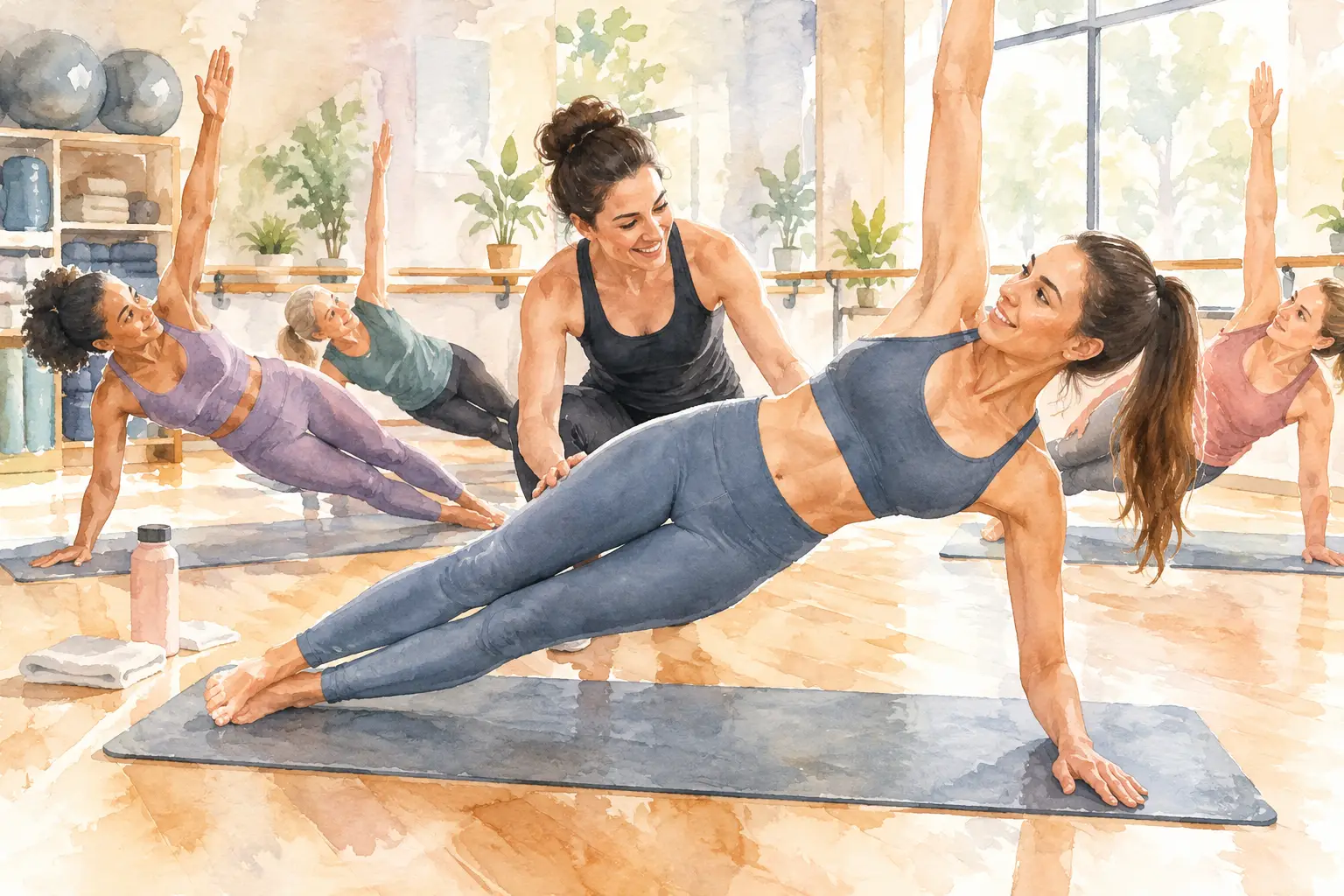
Find the best core stability moves for stronger posture, better balance, and confident low-impact movement, with form tips for every fitness level at home.