
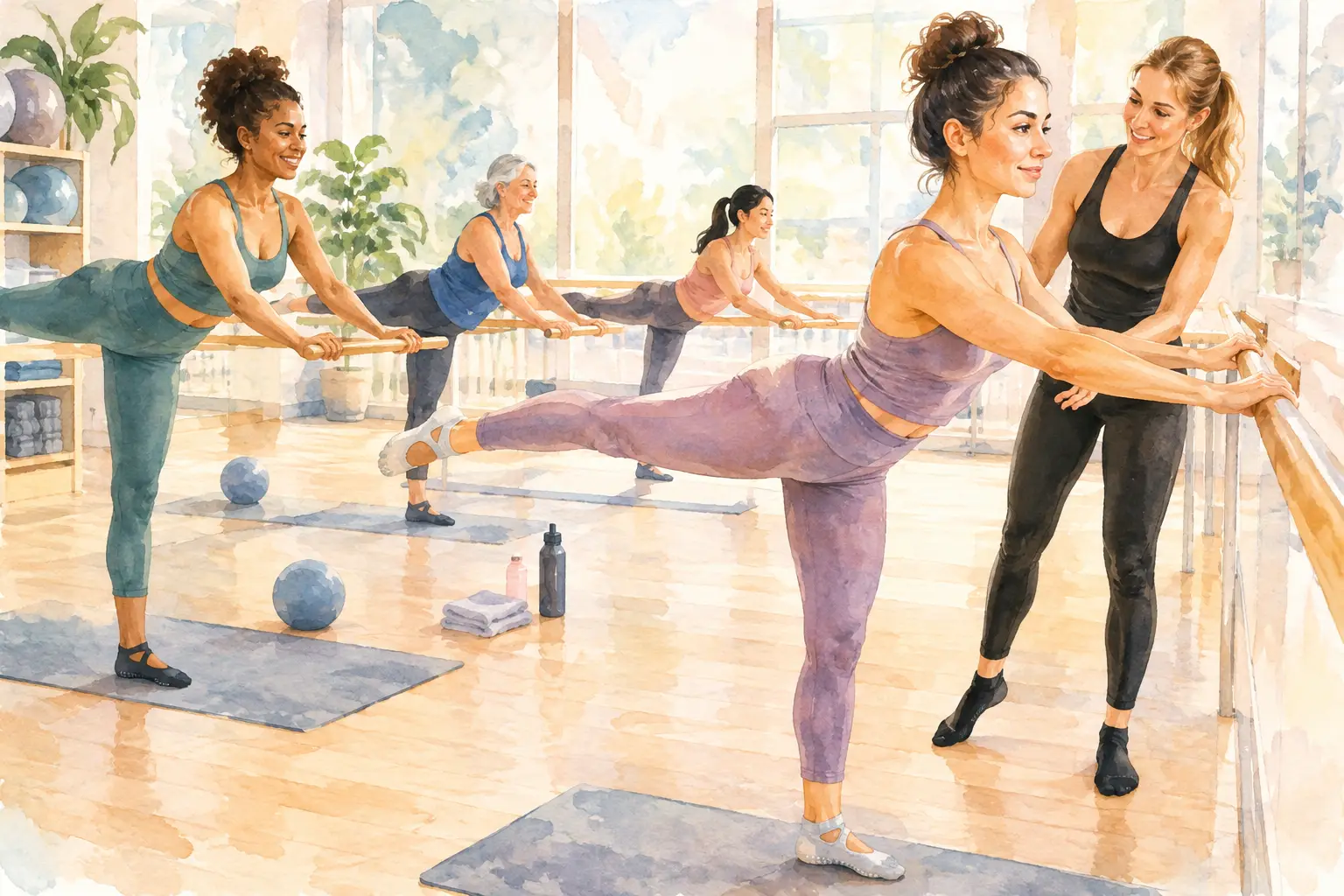
Are Barre Socks Necessary for Every Class?
Are barre socks necessary? Learn when grip socks help with stability and hygiene, when they are required, and how to choose a comfortable pair for class.
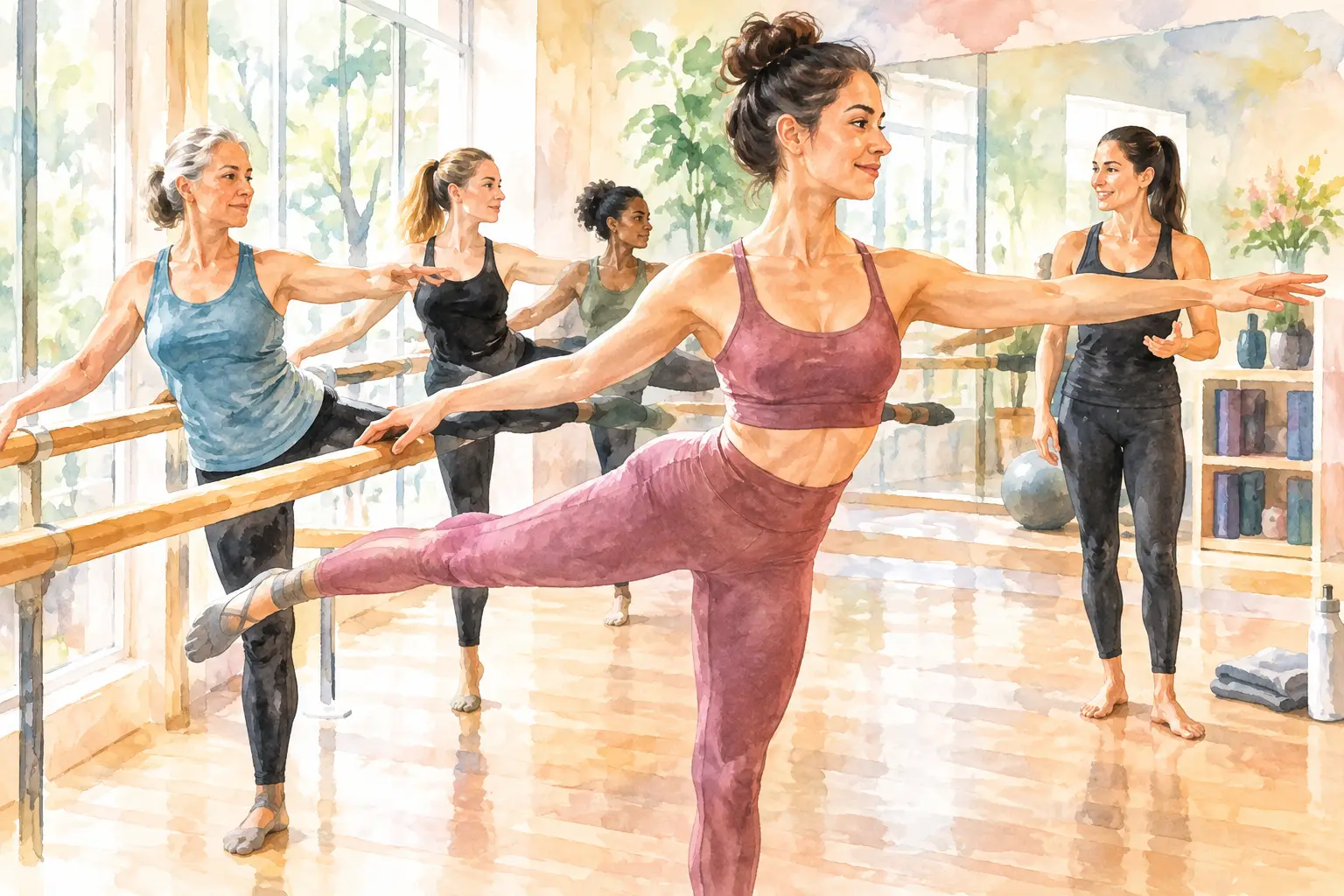
The smallest adjustment can change the whole feeling of a barre exercise. When your feet are grounded, your core is engaged, and your shoulders can relax, the work lands where it should. Barre alignment is not about holding a picture-perfect pose. It is about finding a strong, supported position that helps you move with confidence, get more from every pulse and hold, and feel connected to your body.
At Sea Barre Fitness, instructors offer clear form cues throughout class because alignment is part of what makes barre both effective and approachable. You do not need a dance background, long limbs, or prior fitness experience. You simply need a willingness to listen to your body and make small adjustments as you go.
In barre, alignment is the relationship between your feet, knees, hips, ribs, shoulders, and head as you move. A well-aligned position gives your muscles a clear job to do. Rather than gripping through your neck, leaning into the barre, or placing all the effort in one joint, you create a more balanced foundation for strength, stability, posture, and mobility.
That foundation will not look identical for everyone. Your natural stance, flexibility, balance, and life stage all matter. A wide second-position squat may feel great for one person and too deep for another. A higher heel lift may be the better choice if lowering the heels changes the position of your knees or pelvis. The goal is never to force your body into someone else’s range of motion. The goal is to choose the version of the exercise you can perform with control.
Good alignment also changes from exercise to exercise. During standing thigh work, you may focus on tracking your knees in the same direction as your toes. During core work, your attention may shift to keeping your ribs stacked over your pelvis. In a plank, pressing the floor away and keeping your shoulders supported becomes more important. Barre is full-body training, but the best cue is often the one that brings you back to the specific movement you are doing right now.
Your feet are where barre alignment begins. Whether you are in parallel, turned out, on the balls of your feet, or standing on one leg, notice how your weight meets the floor. Think about spreading it through the whole foot instead of rolling hard toward the inner edge or outer edge.
In parallel positions, point your toes generally forward without trying to make them perfectly straight if that feels unnatural. Let your knees follow the direction of your toes as you bend. This simple relationship helps create a steadier path through squats, lunges, and small pulses.
Turnout deserves patience. In barre, turnout should come from the hips, not from twisting the knees or feet outward. A smaller turnout that lets you keep your knees tracking comfortably is far more useful than a wide position that feels wobbly. Your instructor may invite you to narrow your stance, soften your bend, or return to parallel. Those are smart adjustments, not signs that you are behind.
When the class moves to relevé, or a lifted-heel position, think of rising rather than tipping forward. Keep energy through your legs while using the barre lightly for balance. The barre is there to support your stability, not to carry your weight. If your hands are gripping tightly and your shoulders are creeping toward your ears, step closer, lower your heels, or reduce the range of movement.
Many barre classes include cues such as “draw your navel in,” “zip up through the waist,” or “engage your core.” These cues are not an invitation to hold your breath or clamp down as hard as possible. Instead, imagine gently gathering support around your midsection while still allowing yourself to breathe fully.
A helpful starting point is to stack your rib cage over your pelvis. If your ribs flare forward, gently knit them back toward center. If your lower back is doing all the work, reduce the range of the movement and reconnect to your abdominal support. You may feel your pelvis naturally shift a little depending on the exercise, but you should not need to force an exaggerated tuck to work your core.
This is especially helpful in long sets of thigh work, where fatigue can make it tempting to lean forward or arch your back. A smaller squat with your torso lifted can be more challenging, and more productive, than a deeper squat that loses its shape. Barre often asks for endurance, but control comes before depth.
If you have ever finished a barre class wondering why your neck feels tense, your shoulders may have taken on work meant for your back and core. This is common, especially when you are concentrating or using the barre for balance.
Begin by letting your shoulders drop away from your ears. Keep the back of your neck long and your chest open without pushing the ribs forward. In arm exercises, reach through your fingertips while maintaining a soft bend in the elbows when needed. The movement can be small, but it should feel intentional.
During planks and hands-on-the-floor work, press gently through your palms and feel your upper back become active. Think of creating space across your collarbones rather than sinking between your shoulders. If a full plank is not right for your body that day, an elevated option can still build meaningful strength while giving you more room to focus on form.
The barre can make challenging exercises feel more accessible, but it works best as a point of contact, not a place to hang. Keep your hands light whenever possible. Imagine that you could lift your fingers for a moment without losing all of your balance.
Standing too far from the barre can pull your torso forward. Standing too close can crowd your movement. Take a moment to find enough space for your arms to stay relaxed and your spine to stay tall. This may mean adjusting between combinations, particularly when class shifts from lunges to folded-over glute work or balance exercises.
There are times when a firmer grip is useful, such as during a new balance challenge or while getting settled into a position. That is completely okay. As you become more familiar with the movement, gradually ask your legs and core to do more of the stabilizing work.
When class gets challenging, most of us return to familiar habits. You might grip your toes, lock your knees, clench your jaw, or rush through the pulses. These are normal responses to effort, and they are also useful signals to pause and reset.
Try checking in with four simple questions: Are my feet grounded? Are my knees following my toes? Can I soften my shoulders and jaw? Can I make this movement slightly smaller while keeping control? A quick reset can help you stay present in the exercise instead of simply getting through it.
It also helps to remember that shaking is not a cue to abandon form. It often means your muscles are working hard to maintain the position. Breathe, choose a range you can manage, and take a brief pause if needed. Returning with intention is always more valuable than pushing through a shape that no longer feels supported.
At-home workouts can be convenient, but one advantage of an instructor-led class is real-time guidance. An experienced coach can offer a reminder that suddenly makes a movement click: shift your weight back into your heels, lengthen through the crown of your head, or bring your feet a little closer together. These small changes can help you feel the target muscles more clearly.
You also do not have to figure it all out before your first class. Beginners may need time to learn the language of barre. Returning exercisers may need time to rebuild confidence. Experienced participants may find that better alignment makes familiar exercises feel newly challenging. Every version of that process belongs in the studio.
If you are pregnant, returning to movement after time away, or working around a physical limitation, let your instructor know before class. They can help you choose thoughtful modifications and set up positions that feel more comfortable for your body. Listening to your own feedback is part of strong movement, too.
The next time a barre sequence starts to burn, resist the urge to make it bigger just to prove you can. Ground your feet, lift through your posture, take a full breath, and choose the position that lets you stay steady. That is where lasting strength begins.
Are barre socks necessary? Learn when grip socks help with stability and hygiene, when they are required, and how to choose a comfortable pair for class.
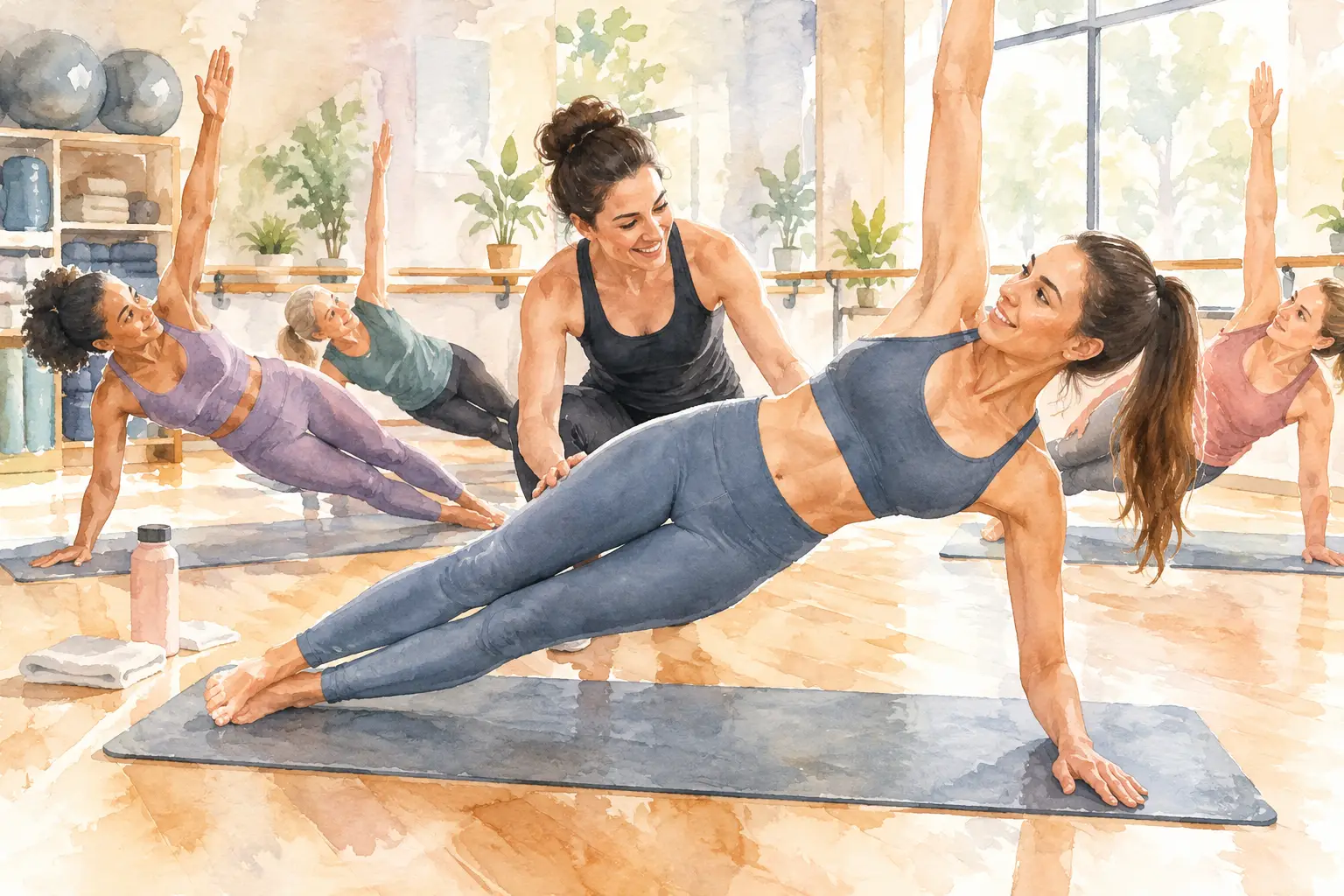
Find the best core stability moves for stronger posture, better balance, and confident low-impact movement, with form tips for every fitness level at home.