
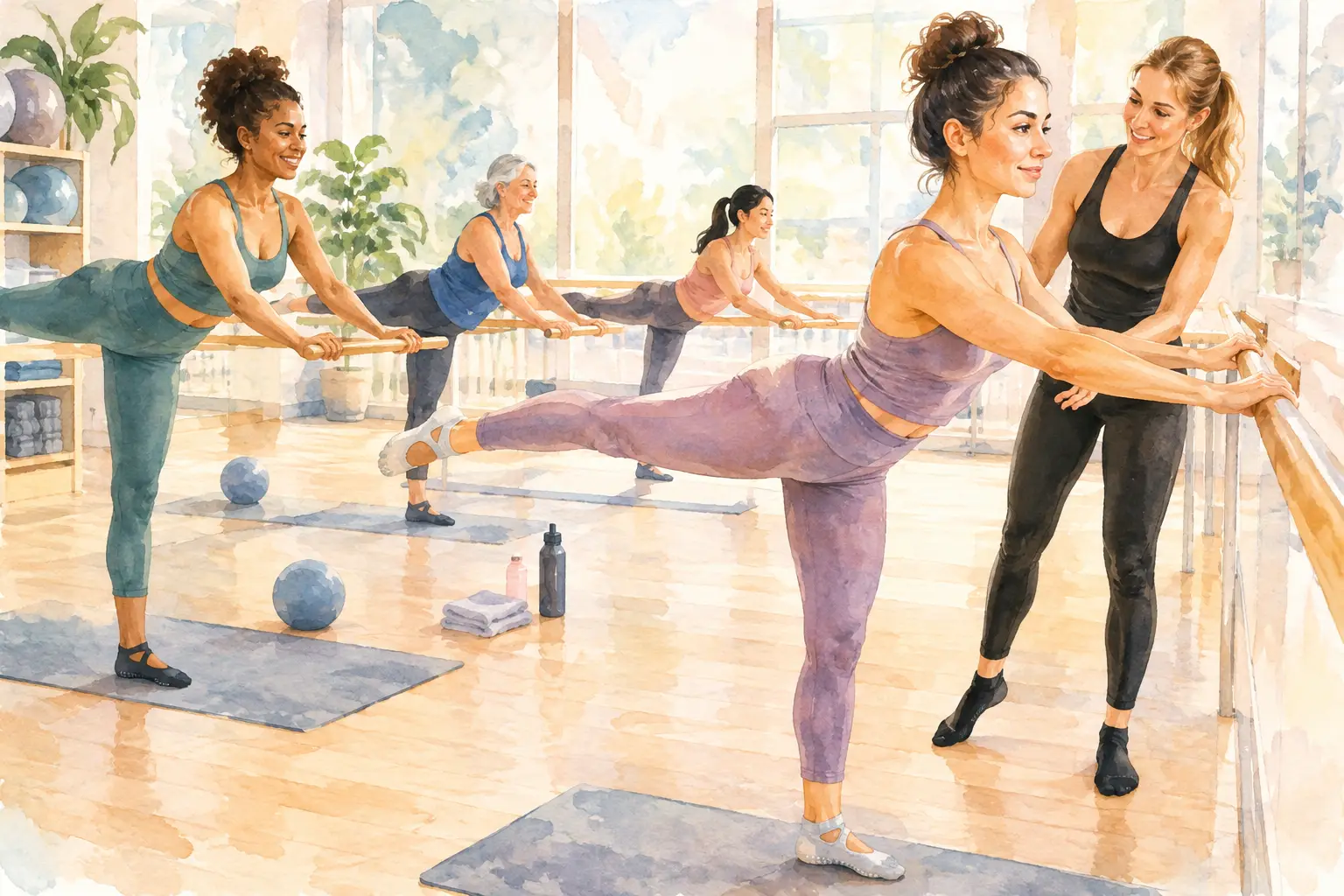
Are Barre Socks Necessary for Every Class?
Are barre socks necessary? Learn when grip socks help with stability and hygiene, when they are required, and how to choose a comfortable pair for class.
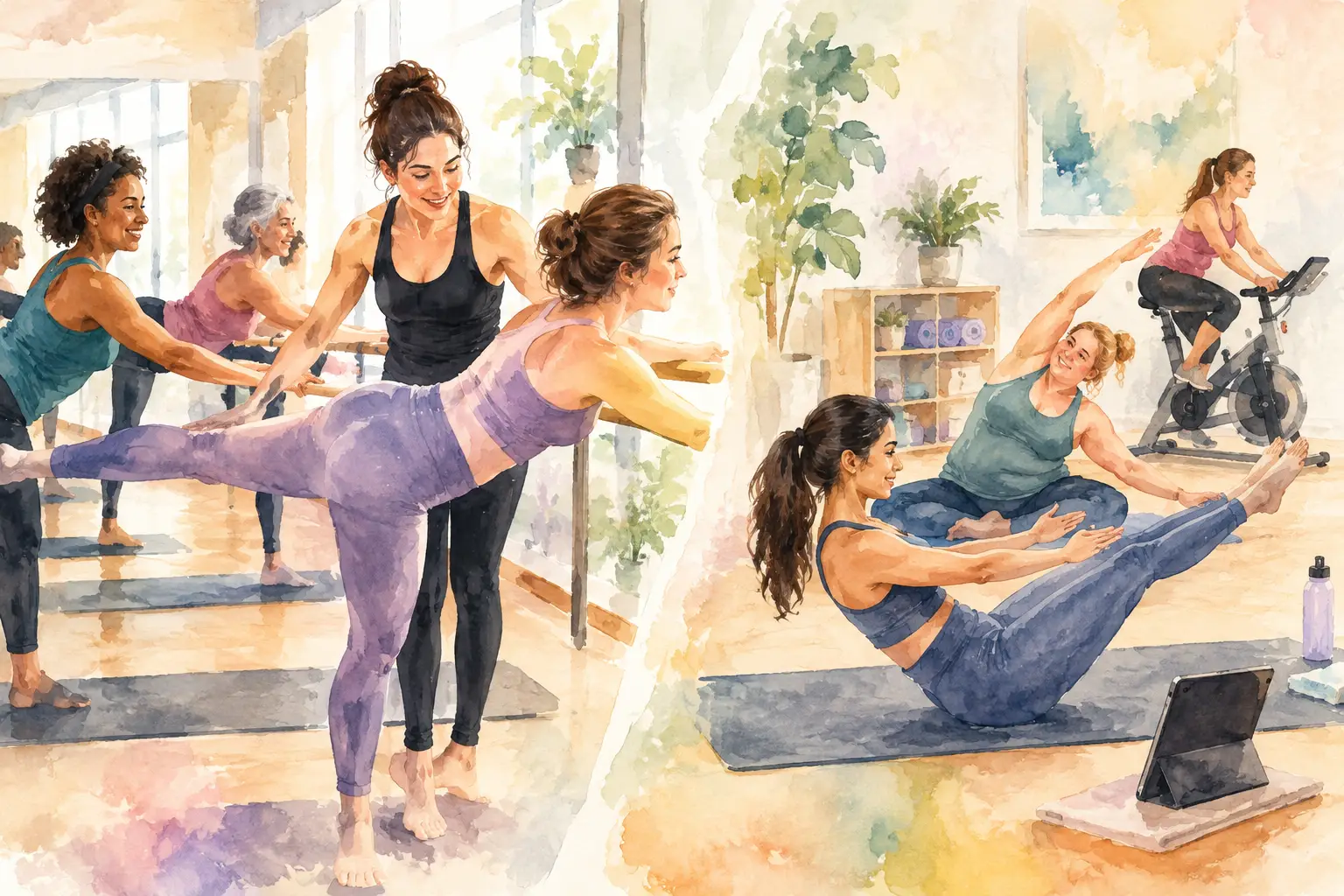
A fitness app can make it easy to press play. Instructor coaching gives you someone who notices when your shoulders are creeping toward your ears, your hips are shifting in a lunge, or you are ready to try the next level. When considering instructor coaching versus fitness apps, the best choice is not always about which workout looks hardest or costs the least. It is about what helps you move well, feel supported, and return often enough to build real strength and confidence.
For many people, the answer is a mix of both. But if you are starting fresh, returning to movement, managing a busy season, or looking for more connection in your routine, the differences matter.
Fitness apps are built for convenience. You can choose a workout at home, on vacation, or during a free 20 minutes between responsibilities. Many offer a wide variety of formats, from stretching and yoga to cycling, strength work, and guided meditation. That flexibility can be genuinely helpful, especially when getting to a class is not possible.
Instructor-led fitness is built around a different advantage: responsive guidance. A skilled coach is not simply counting reps or demonstrating the next move. They are watching how you move, offering modifications, helping you find proper alignment, and creating a class environment where you can stay focused on yourself without feeling alone.
That difference is especially meaningful in low-impact formats such as barre, Pilates-inspired training, yoga, and indoor cycling. Small adjustments can change how an exercise feels. In barre, for example, a coach may help you soften your knees, lengthen through your spine, or shift your weight so you can better connect with your core and supporting muscles. In yoga, a cue to slow your breath or use a prop can help a pose feel more accessible. Those details are difficult for a prerecorded workout to provide in the moment.
Apps deserve credit for removing barriers. There is no commute, no class start time, and no need to wonder whether you will recognize anyone in the room. If your schedule changes daily or you travel frequently, a digital workout can help you preserve momentum instead of skipping movement altogether.
They also offer privacy. Some people feel more comfortable learning the basics of a new format at home before joining a group class. Others simply enjoy having an on-demand option for a quiet stretch, a short mobility session, or a light workout on a day when energy is low.
Cost can be another factor. A monthly app subscription may feel like an easy first step when you are exploring what type of movement you enjoy. The trade-off is that the app cannot truly assess whether an exercise is right for your body that day. It can offer a general modification, but it cannot see how you are responding to it.
Apps can also make consistency feel deceptively simple. You may have a library of hundreds of workouts, yet still spend ten minutes scrolling, comparing, and deciding what to do. Choice is useful, but too much choice can become a reason to postpone the workout entirely.
A good instructor helps take the guesswork out of your workout. You arrive, settle in, and are guided through a thoughtfully structured class with a beginning, middle, and finish. You do not have to create your own plan or wonder whether you are doing enough. You can focus on your breath, your effort, and the way your body feels.
Coaching also makes progress feel more personal. Not every day calls for the same intensity, range of motion, or pace. An instructor can encourage you to add a little challenge when you are ready or choose a more supportive option when you need it. That is not about pushing past your limits. It is about learning to work with your body while still moving forward.
Beginners often assume everyone else in a studio already knows what they are doing. In a welcoming class, that is not the expectation. Clear demonstrations and simple cues help you understand where to place your feet, how to use your core, and how to adjust a movement without apology.
Even experienced participants benefit from this attention. Familiar movements can start to feel automatic, and automatic does not always mean intentional. A coach can help you reconnect with posture, balance, control, and breathing so your workout continues to feel purposeful.
An app can send a notification at 6:00 p.m. A class instructor and community give you a reason to show up at 6:00 p.m. Those are not the same thing.
When you recognize familiar faces, know your instructor will be there, and have reserved time for yourself, movement becomes part of your week instead of an item you continually move to tomorrow’s list. The supportive energy of a group class can carry you through days when motivation is low. You do not need to arrive feeling perfectly energized. Often, you leave feeling stronger because you came anyway.
Fitness is personal, but it does not have to be solitary. For adults in Lewes, Millsboro, and Bethany, a local studio can become a place to build a routine and feel connected to neighbors who are also making time for their well-being.
That community does not require anyone to be outgoing or at the same fitness level. It can be as simple as a warm welcome at the door, encouragement during the final set, and the comfort of being in a room where people are working toward their own version of stronger, steadier movement.
There are seasons when an app is exactly what you need. Maybe you have only 15 minutes before work. Maybe you are away from home. Maybe you want an extra mobility session between studio classes, or you prefer to try a new style of movement privately first.
An app may also work well for someone who is already comfortable choosing workouts, checking their form, and creating a balanced schedule. The key is honesty: Are you using the app consistently, or are you paying for access you rarely use?
If you frequently stop a video to figure out the movement, skip the parts that feel unfamiliar, or feel uncertain afterward about whether you worked effectively, instructor guidance may offer more value than another content library.
This does not have to be an either-or decision. A studio class can be the anchor of your week, giving you expert guidance, variety, and accountability. An app can fill the gaps with a short stretch, a meditation, or a gentle at-home session when a class does not fit your schedule.
The anchor matters because consistency grows more easily when your routine has structure. At Sea Barre Fitness, instructor-led barre, yoga, cycling, Pilates-inspired classes, and personal training give clients options to build strength, mobility, endurance, and confidence without relying on high-impact exercise. The goal is not to do every format or attend every day. It is to find a rhythm that feels challenging, supportive, and realistic for your life.
Start with the question behind the question. If you are comparing instructor coaching versus fitness apps because you want convenience, an app may be a helpful addition. If you are comparing them because you have struggled to stay consistent, want feedback on movement, or miss feeling connected, coaching is likely the stronger fit.
Consider what happens after the workout, too. Do you feel clear about what you accomplished? Do you feel encouraged to come back? Do you notice yourself standing taller, moving with more ease, or feeling more capable in everyday life? The best routine is one that supports those wins over time.
You do not need a perfect plan before you begin. Choose the setting that makes you feel comfortable enough to start and supported enough to keep going. A good workout should leave room for your real life – and remind you that taking care of your strength, mobility, and confidence is time well spent.
Are barre socks necessary? Learn when grip socks help with stability and hygiene, when they are required, and how to choose a comfortable pair for class.
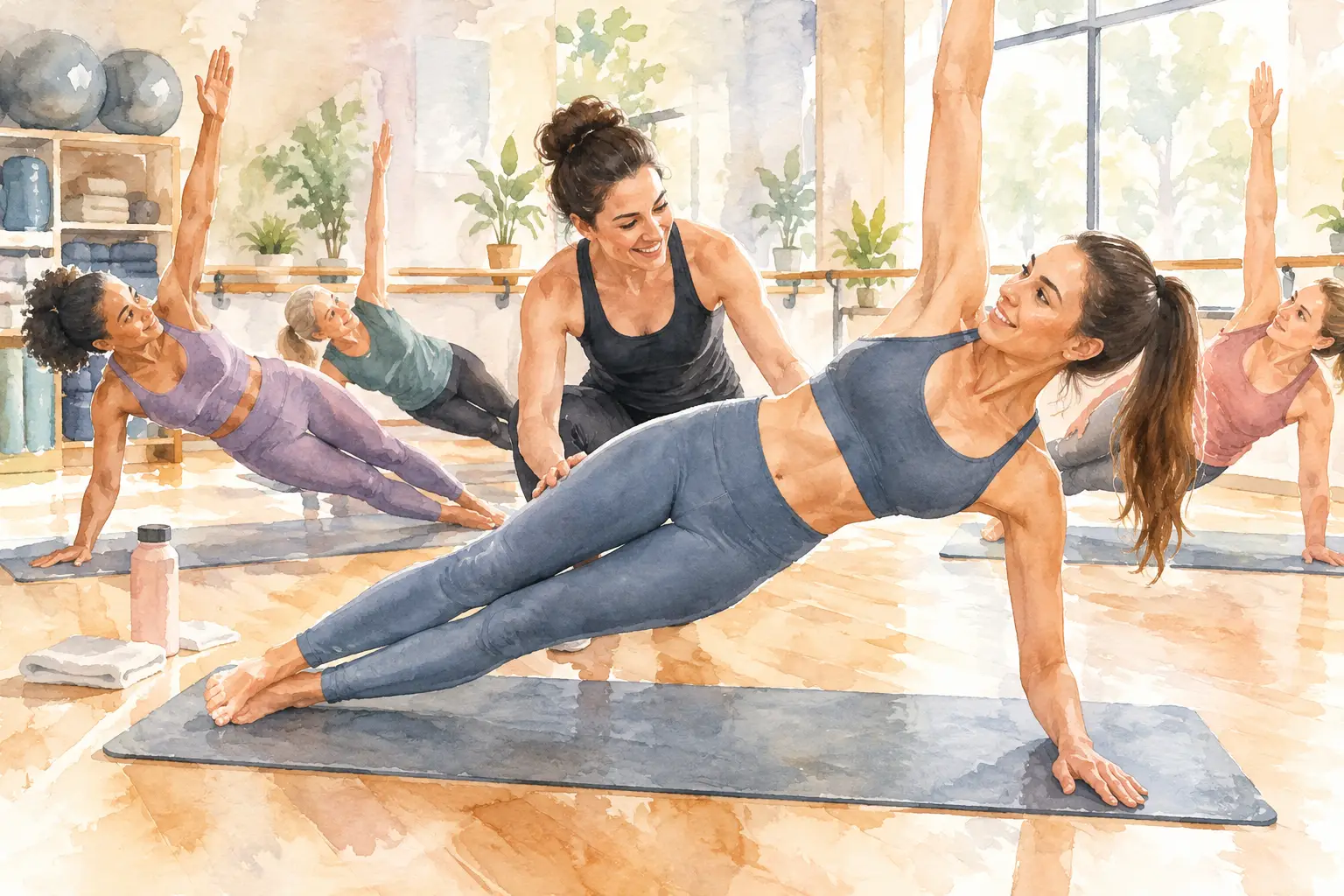
Find the best core stability moves for stronger posture, better balance, and confident low-impact movement, with form tips for every fitness level at home.