
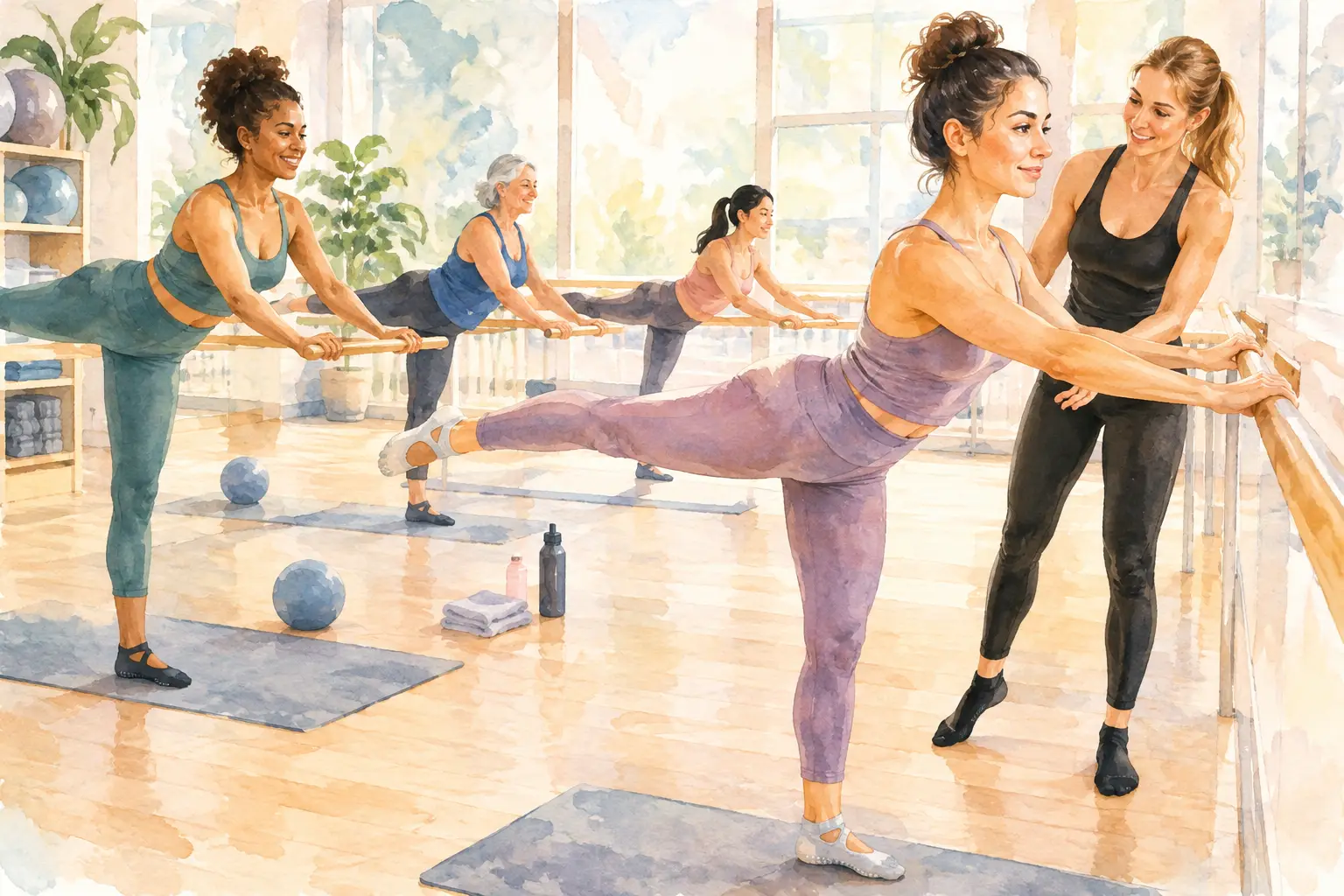
Are Barre Socks Necessary for Every Class?
Are barre socks necessary? Learn when grip socks help with stability and hygiene, when they are required, and how to choose a comfortable pair for class.
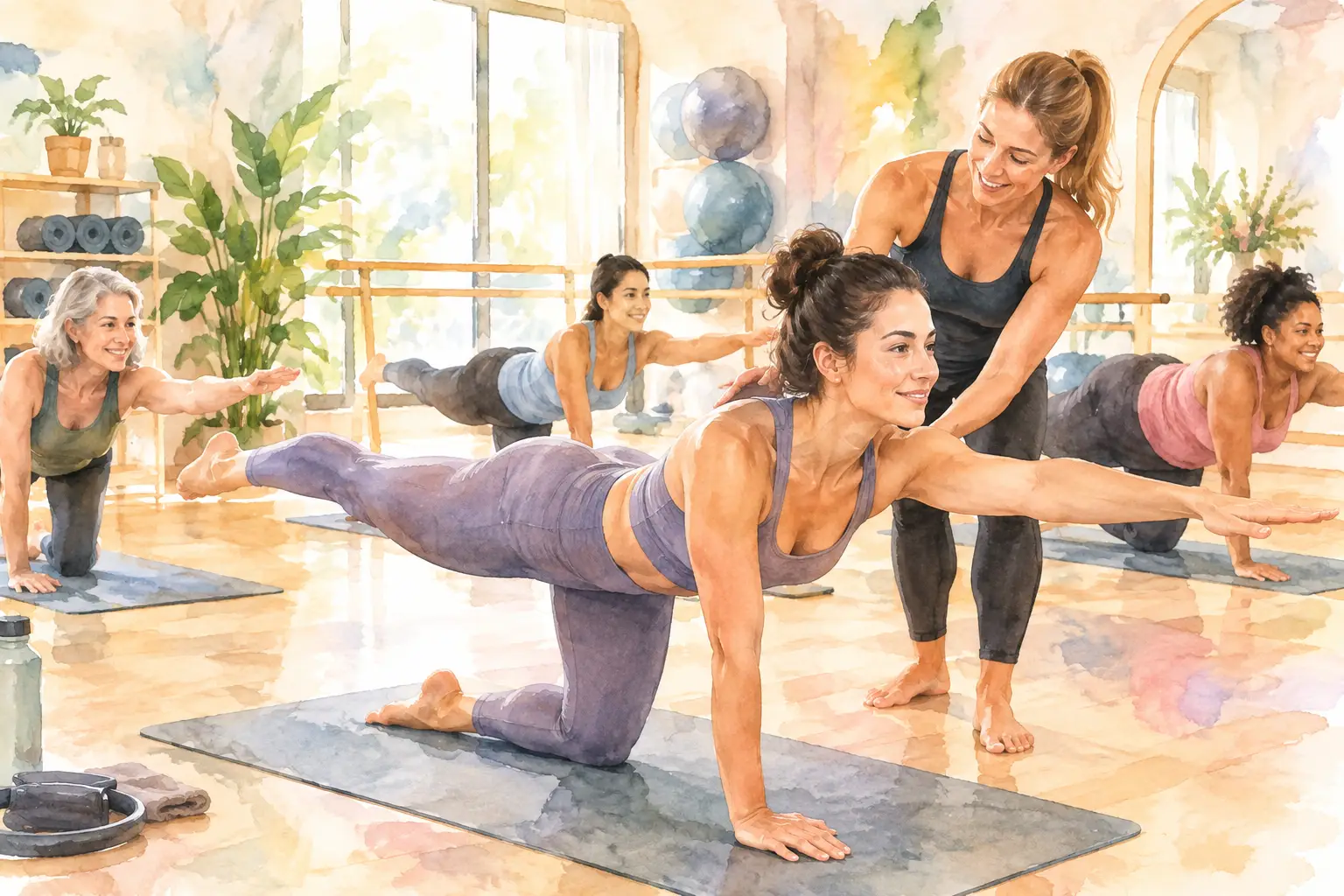
A workout can leave your muscles feeling challenged without leaving your knees, hips, or wrists feeling beaten up. That distinction is at the heart of what makes Pilates low impact. Pilates asks your body to work with control, intention, and steady resistance rather than repeated pounding, jumping, or forceful landings.
For many people, that is the sweet spot: a class that feels purposeful and strengthening while still supporting the joints that carry them through busy beach-town days, long walks, work schedules, family life, and everything in between. Low impact does not mean low effort. It means the effort is delivered differently.
Pilates is considered low impact because it limits the jarring forces that can occur when the body repeatedly hits the ground. In a typical Pilates-inspired class, movements are often performed on a mat, on your back, on your side, seated, kneeling, or standing with both feet grounded. There is little to no jumping, and transitions are deliberate rather than rushed.
Instead of relying on momentum, Pilates emphasizes muscular control. You may slowly lower a leg, hold a bridge, press through your heels, rotate from the ribs, or move through a small but focused range of motion. Your muscles are working, but your joints are not being asked to absorb the impact of hard landings.
This approach can make Pilates an inviting option for people who want to build a consistent fitness routine without choosing between feeling challenged and feeling supported.
High-impact movement usually includes moments when one or both feet leave the floor and then land again. Think of hopping, running, or repeated jumps. Those movements have a place for people who enjoy them and feel ready for them, but they are not necessary for an effective workout.
Pilates keeps most movement grounded. When you are standing, you may shift your weight, rise to the balls of your feet, or move through controlled leg work, but the focus remains on stability and alignment. On the mat, the floor provides feedback and support as you engage your core, hips, glutes, and upper body.
Less pounding can make it easier to return for your next class feeling capable and ready to continue building strength.
Pilates often looks calm from the outside, but anyone who has held a slow tabletop toe tap or worked through a series of precise leg lifts knows how much effort it can require. The challenge comes from time under tension, coordination, and attention to form.
A slower pace gives you a chance to notice where your body is compensating. Are your shoulders creeping toward your ears? Is your lower back taking over? Are you holding your breath? With a coach’s guidance, you can reset and find a stronger, more sustainable version of the movement.
That control matters because momentum can sometimes carry a movement farther than the body is prepared to support. Pilates encourages you to own each phase of an exercise: the lift, the hold, and the return.
Low impact is not the same as low intensity. A Pilates workout can make your legs shake, ask your core to work deeply, and challenge your posture in ways that carry into everyday life. The difference is that resistance often comes from body weight, gravity, small props, springs, or a longer hold instead of heavy loading or explosive force.
This creates a smart kind of challenge. Muscles can work hard to stabilize the pelvis, support the spine, and maintain balanced alignment while the movement itself stays measured.
In Pilates, “core” means more than trying to flatten your stomach. It refers to the coordinated support around your midsection, including the muscles that help you move with steadiness and control. A strong, engaged core can help you feel more connected during everyday actions like reaching, carrying, climbing stairs, or getting up from the floor.
Pilates classes also encourage you to work from the center outward. Rather than simply swinging an arm or lifting a leg, you begin with breath and stability, then move with intention. This can make even small exercises feel surprisingly effective.
Thoughtful alignment is another reason Pilates feels joint-friendly. The goal is not to force your body into the biggest range of motion possible. The goal is to find a range that allows you to feel the intended muscles working with good control.
For example, a deeper squat is not automatically better if it causes your heels to lift or your knees to feel uncomfortable. A smaller squat with steady feet, engaged legs, and a long spine may be the more useful choice that day. Pilates gives you permission to work where your body is now, then build from there.
This is especially valuable for beginners and returning exercisers. You do not have to arrive with perfect flexibility or previous Pilates experience. You need a willingness to listen, learn, and let consistent practice do its job.
Pilates can be adapted, but it is still exercise. What feels supportive for one person may need adjustment for another depending on mobility, current strength, comfort, and movement history. A wrist-bearing position, a deep bend, or a long balance hold may feel great one day and less appealing the next.
That is why expert coaching matters. A knowledgeable instructor can offer options such as changing the range of motion, adding support, adjusting your position, or choosing a different version of an exercise. Modifications are not a step back. They are a way to make the class work for your body so you can move with confidence.
If you are pregnant, returning to movement after time away, or managing a physical concern, it is wise to get personalized guidance from an appropriate qualified professional before starting or changing an exercise routine. Then let your instructor know what support would help you feel comfortable in class.
People sometimes hear “low impact” and assume the workout will be easy. Then they meet a slow side-lying leg series, a controlled plank variation, or a carefully paced core sequence. The burn arrives quickly.
Pilates creates intensity through precision. Small muscles that may not get much attention in everyday movement are asked to contribute. Larger muscles are challenged to work with better balance. Breath becomes part of the rhythm, helping you stay present instead of rushing to the finish.
You may leave class feeling taller, more aware of your posture, and pleasantly worked from head to toe. Progress may show up as steadier balance, improved mobility, stronger endurance in class, or the confidence to choose a slightly more challenging option when it feels right.
The biggest benefit of low-impact movement is often consistency. A routine does not need to leave you exhausted to be meaningful. It needs to be something you can return to often enough to build familiarity, strength, and trust in your body.
At Sea Barre Fitness, instructor-led Pilates-inspired classes are designed to meet you with encouragement and clear guidance, whether you are brand new to structured exercise or looking for a fresh way to support your existing routine. You can focus on your form, take the option that serves you, and still feel the energy of moving alongside a welcoming community.
Start with the version of Pilates that feels manageable, not the version you think you are supposed to perform. Bring your attention to your breath, move with care, and allow strength to grow one well-supported class at a time.
Are barre socks necessary? Learn when grip socks help with stability and hygiene, when they are required, and how to choose a comfortable pair for class.
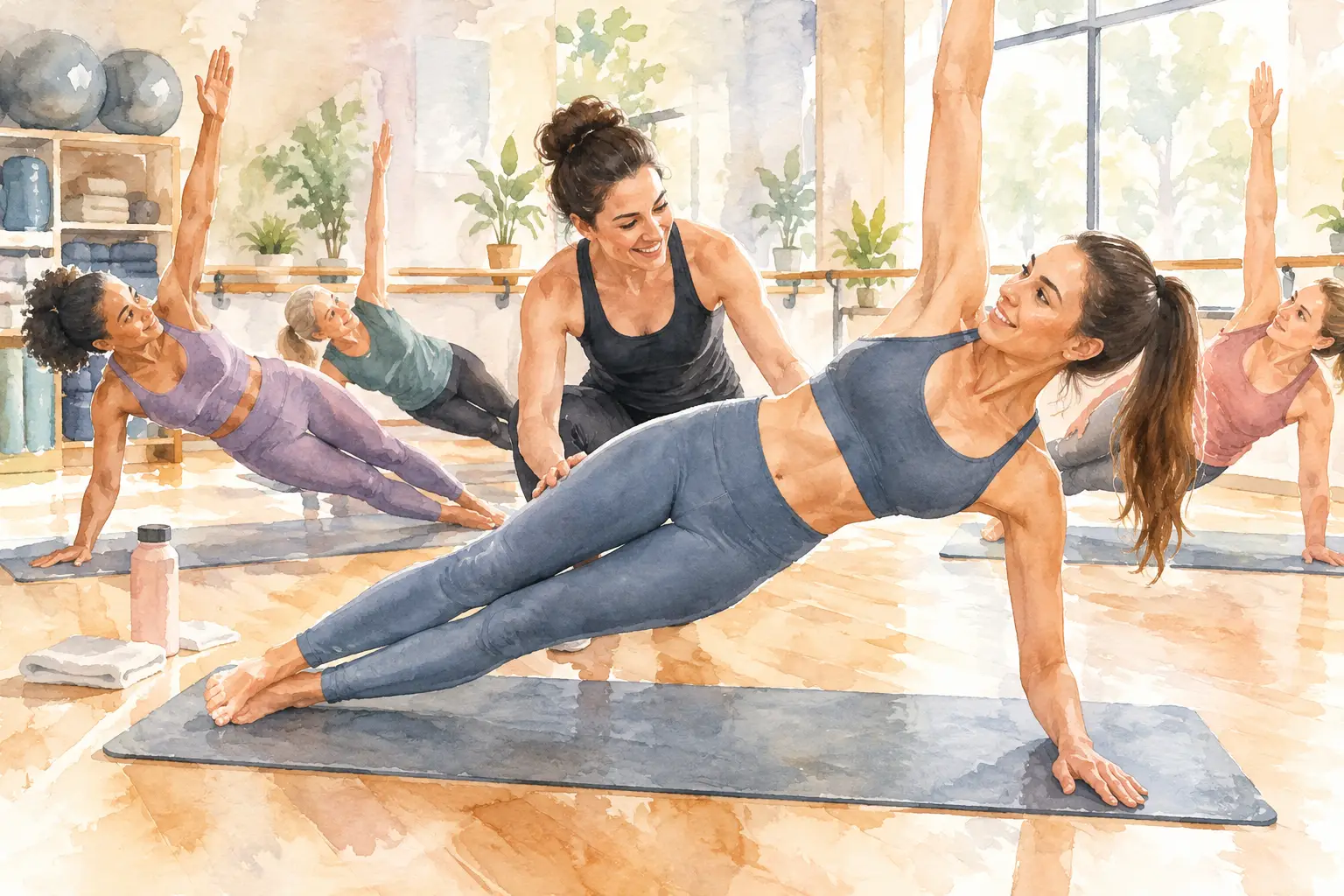
Find the best core stability moves for stronger posture, better balance, and confident low-impact movement, with form tips for every fitness level at home.