
Are Barre Socks Necessary for Every Class?
Are barre socks necessary? Learn when grip socks help with stability and hygiene, when they are required, and how to choose a comfortable pair for class.
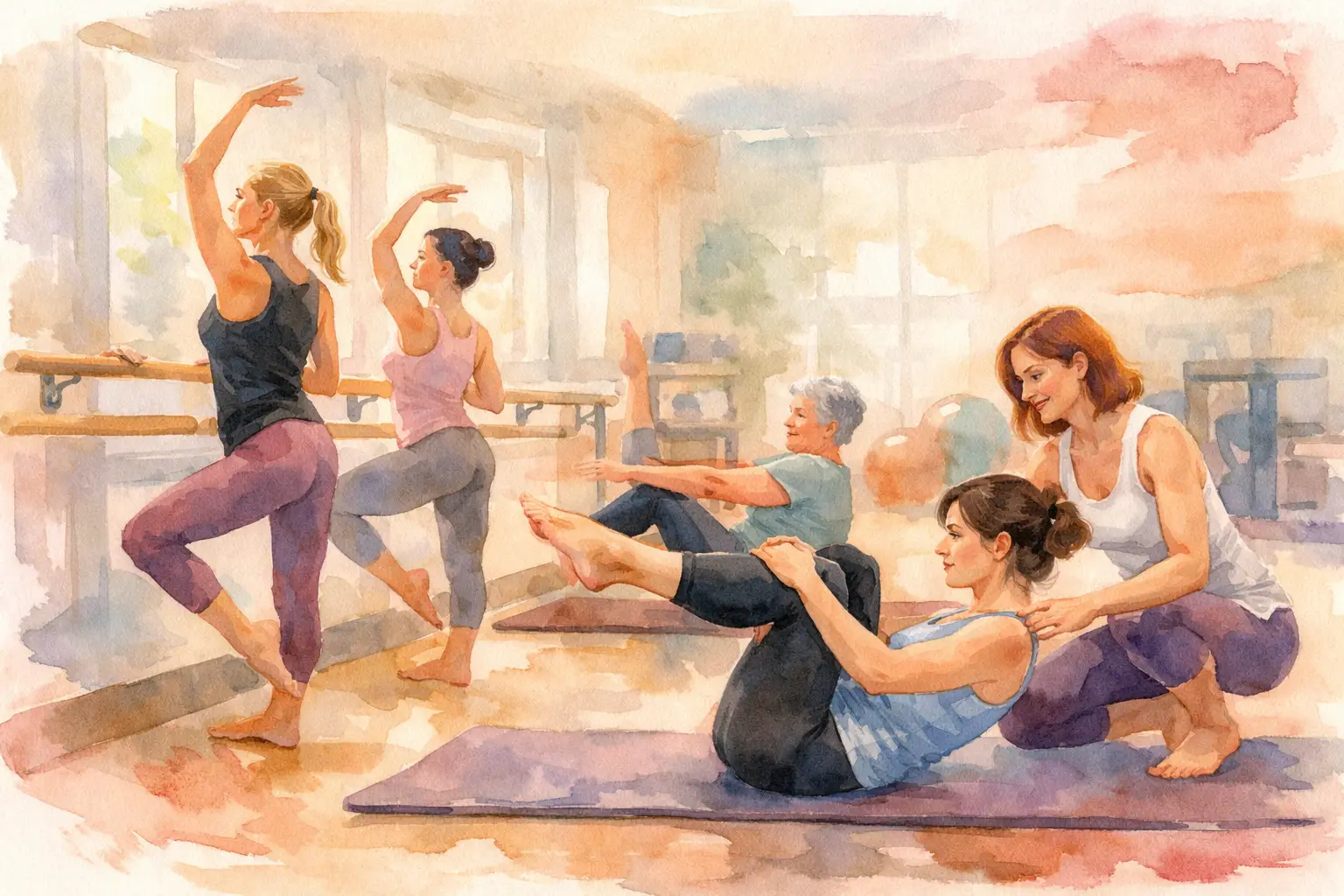
Some days, you want the satisfying shake that comes from holding a strong barre position. Other days, you want to slow down, connect to your breath, and feel your core switch on with intention. This barre pilates comparison can help you understand what each class offers, where they overlap, and how to choose a workout that feels right for your body and your goals.
Both barre and Pilates-inspired training are smart choices for building strength without high-impact jumping or punishing your joints. They can support better posture, balance, mobility, muscular endurance, and everyday confidence. The real difference comes down to how you like to move, what kind of challenge motivates you, and what you want to feel when class is over.
Barre is a full-body, music-driven workout that blends small, controlled strength exercises with elements inspired by ballet, Pilates, and functional movement. You do not need dance experience. In fact, most people come to barre because they want a welcoming way to strengthen and tone muscles while improving stability and posture.
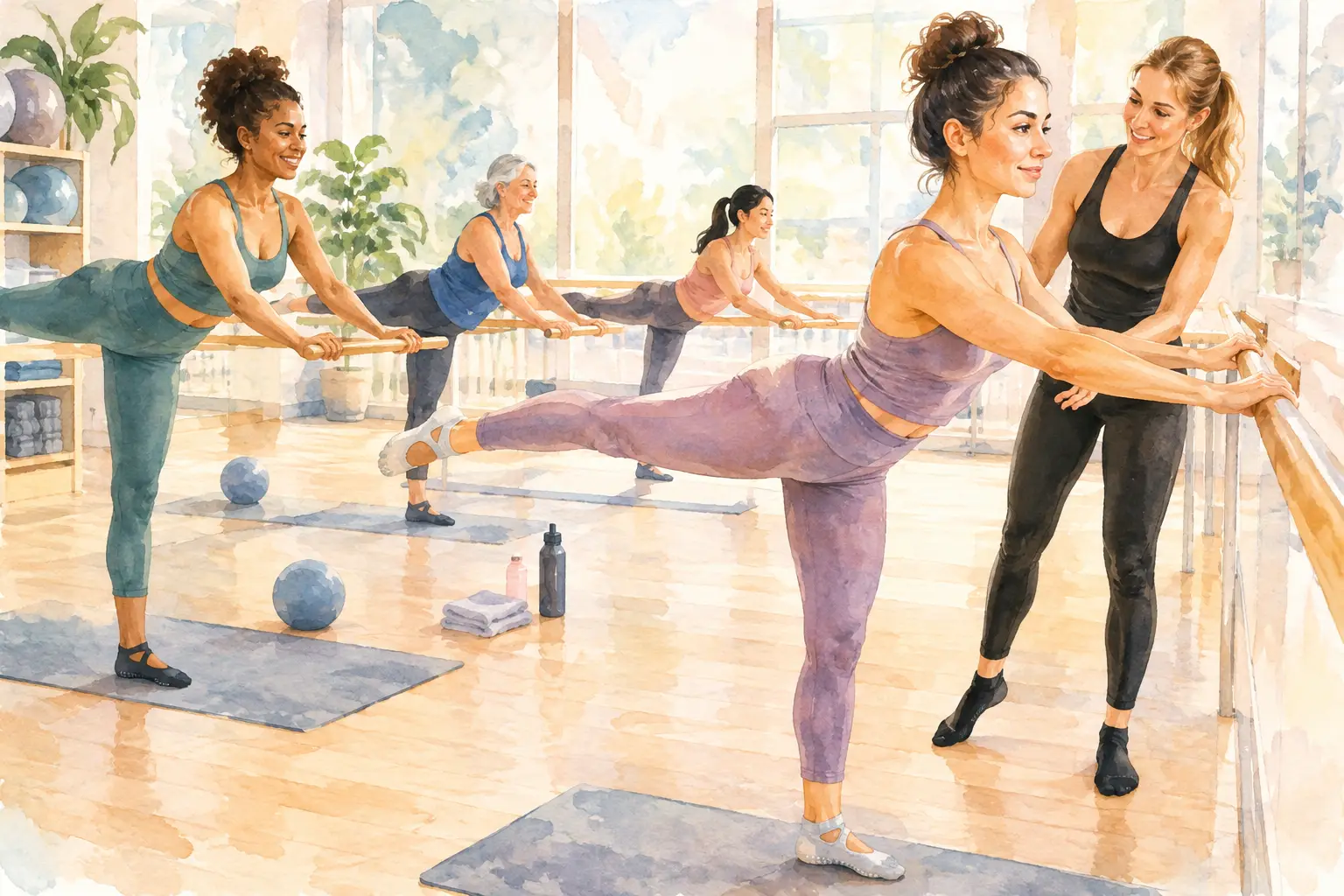
A typical barre class often moves through focused sections for the legs, seat, arms, core, and flexibility. You may use the barre for support, along with light hand weights, a ball, resistance bands, or body weight. The movements are precise, and the smaller range of motion can make muscles work harder than you expect. That familiar shake is simply feedback that you have found a challenging effort.
Pilates-inspired classes put more attention on core connection, alignment, controlled movement, and breath. Depending on the class, you may work on a mat or use small props. The pace is often more deliberate than barre, with a strong focus on moving well rather than moving fast. Pilates-inspired work is especially helpful when you want to feel more connected to your posture, deep core strength, hip stability, and mobility.
Neither format is automatically better. Barre tends to feel more rhythmic and endurance-focused, while Pilates-inspired training often feels more centered and technique-led. Many clients enjoy both because each fills a different need in a well-rounded routine.
The easiest way to compare barre and Pilates is to think about the experience of the class.
In barre, you may hold a position, repeat a small movement, or work one muscle group for an extended period before transitioning. A set of tiny pulses in a lunge or a sustained plank can feel intense without requiring heavy loads or impact. This style helps build muscular endurance, which supports daily activities such as climbing stairs, carrying groceries, or maintaining comfortable posture through a long day.
Barre also has an energizing flow. Music and instructor cues keep class moving, and the variety of standing, seated, and floor-based exercises makes the time pass quickly. If you enjoy structure, a little rhythm, and the motivation of working alongside a group, barre may become the class you look forward to all week.
Pilates-inspired classes also challenge muscles, but the emphasis is often on coordination. You may be asked to keep your ribs stacked, lengthen through your spine, stabilize your pelvis, or exhale as you engage your core. These details are not about perfection. They help you learn how to recruit the muscles that support efficient, comfortable movement.
The pace leaves room to notice what your body is doing. That can be valuable for beginners who are still learning exercise form, people returning to movement after time away, and anyone who wants to balance more active classes with focused mobility and core work. It can also be surprisingly demanding. Slow, controlled exercises ask for concentration and stability in ways larger movements sometimes do not.
Barre and Pilates-inspired classes share more than they differ. Both encourage intentional alignment, a strong and supported core, steady breathing, and balanced strength. Both can be adapted with options, making them approachable whether you are brand new to group fitness or have been moving for years.
The quality of instruction matters just as much as the class name. A coach who offers clear form guidance and choices for different bodies can help you get more from either format. At Sea Barre Fitness, that supportive coaching is part of the experience, so you can work at an appropriate level while still feeling encouraged to grow.
Choose barre when you want a full-body workout with a lively pace and focused muscle work. It is a strong fit if your goals include improving lower-body strength, developing balance, feeling more upright through your posture, and getting that energized feeling that comes from moving to music in a group.
Choose Pilates-inspired training when you want to spend more time on core awareness, mobility, and controlled strength. It may be your best match if you are rebuilding consistency, want to move with more intention, or enjoy a class that asks you to pay attention to the details of your alignment.
If your main goal is visible muscle tone, either can support it when you attend consistently and progressively challenge yourself. Barre may feel more direct because it often spends longer on specific areas like thighs, glutes, arms, and core. Pilates-inspired work can create a different but equally valuable foundation by improving the control and stability behind those movements.
If you are pregnant, managing physical limitations, or returning after an extended break, the answer depends on your individual comfort and the guidance you have been given by your care team. Let your instructor know before class. Good coaches can provide thoughtful modifications, and choosing a slower pace is always a valid way to begin.
You do not need to commit to barre or Pilates-inspired movement forever. Many people see the most sustainable results when their routine has variety. For example, two barre classes can provide a satisfying strength and endurance challenge, while one Pilates-inspired session can reinforce core connection, mobility, and recovery-minded movement.
Your schedule, energy, and preferences matter. A busy week may call for the familiar motivation of a barre class. Another week, you may want the grounded focus of Pilates-inspired work. The best workout is not the one that sounds most impressive. It is the one you can return to consistently and leave feeling stronger, more capable, and glad you came.
First-time nerves are normal, especially when you are unsure whether you will know the moves. You do not need to arrive already flexible, coordinated, or strong. Wear clothing that lets you move comfortably, bring water, and plan to listen for the instructor’s cues. In barre, grip socks are often helpful for stability. For Pilates-inspired mat work, your studio can let you know what equipment is provided and what to bring.
Give yourself permission to take breaks. Small movements can be challenging, and adjusting your range of motion is not falling behind. It is a smart way to build strength with good form. Over time, you may hold positions longer, feel steadier in balance work, and notice that daily movement feels more supported.
A class should challenge you without making you feel like you have to prove anything. Try the format that sounds most appealing, ask questions, and let your body guide the choice. The right next class is the one that helps you build a routine you genuinely want to keep.
Are barre socks necessary? Learn when grip socks help with stability and hygiene, when they are required, and how to choose a comfortable pair for class.
Find the best core stability moves for stronger posture, better balance, and confident low-impact movement, with form tips for every fitness level at home.