
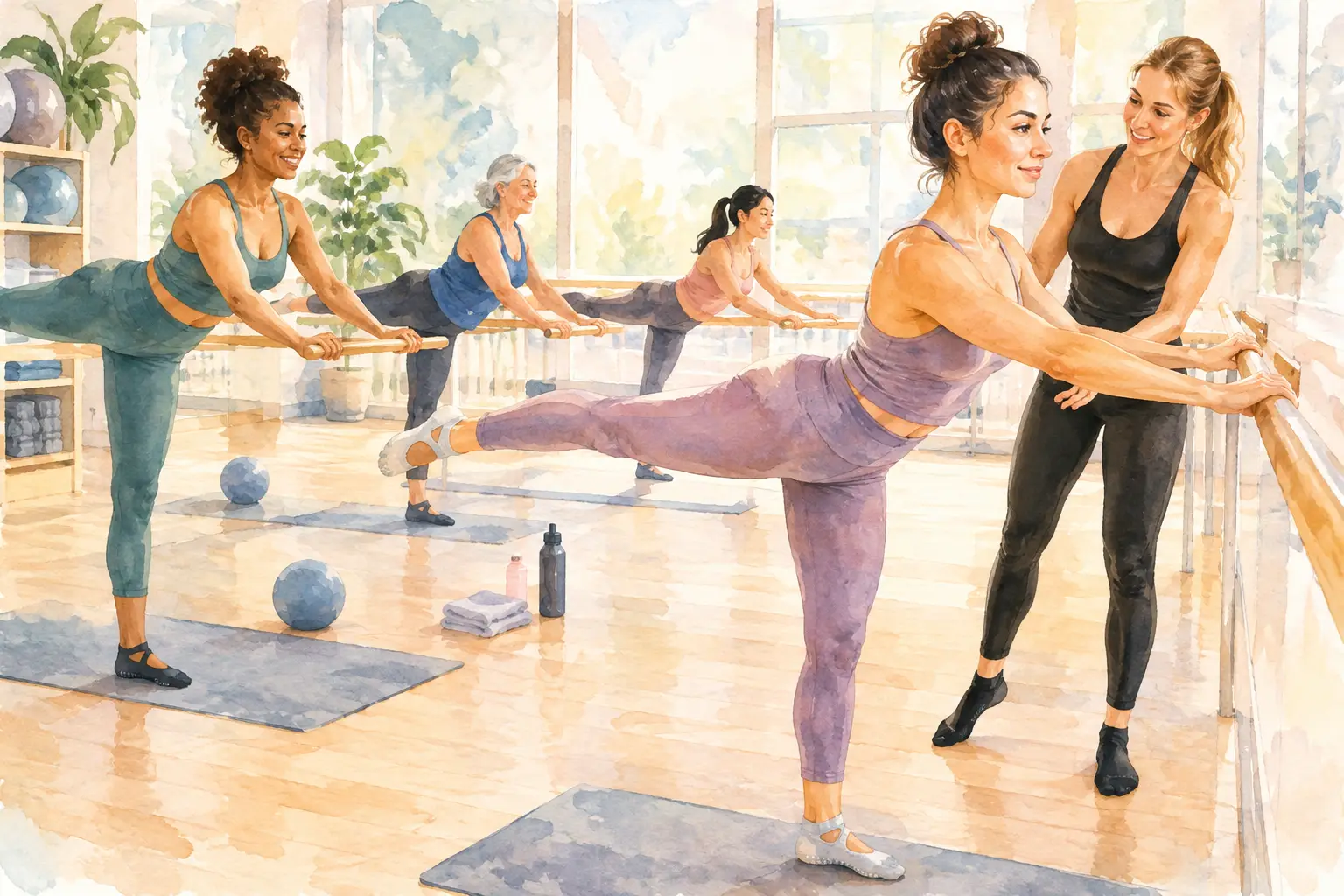
Are Barre Socks Necessary for Every Class?
Are barre socks necessary? Learn when grip socks help with stability and hygiene, when they are required, and how to choose a comfortable pair for class.
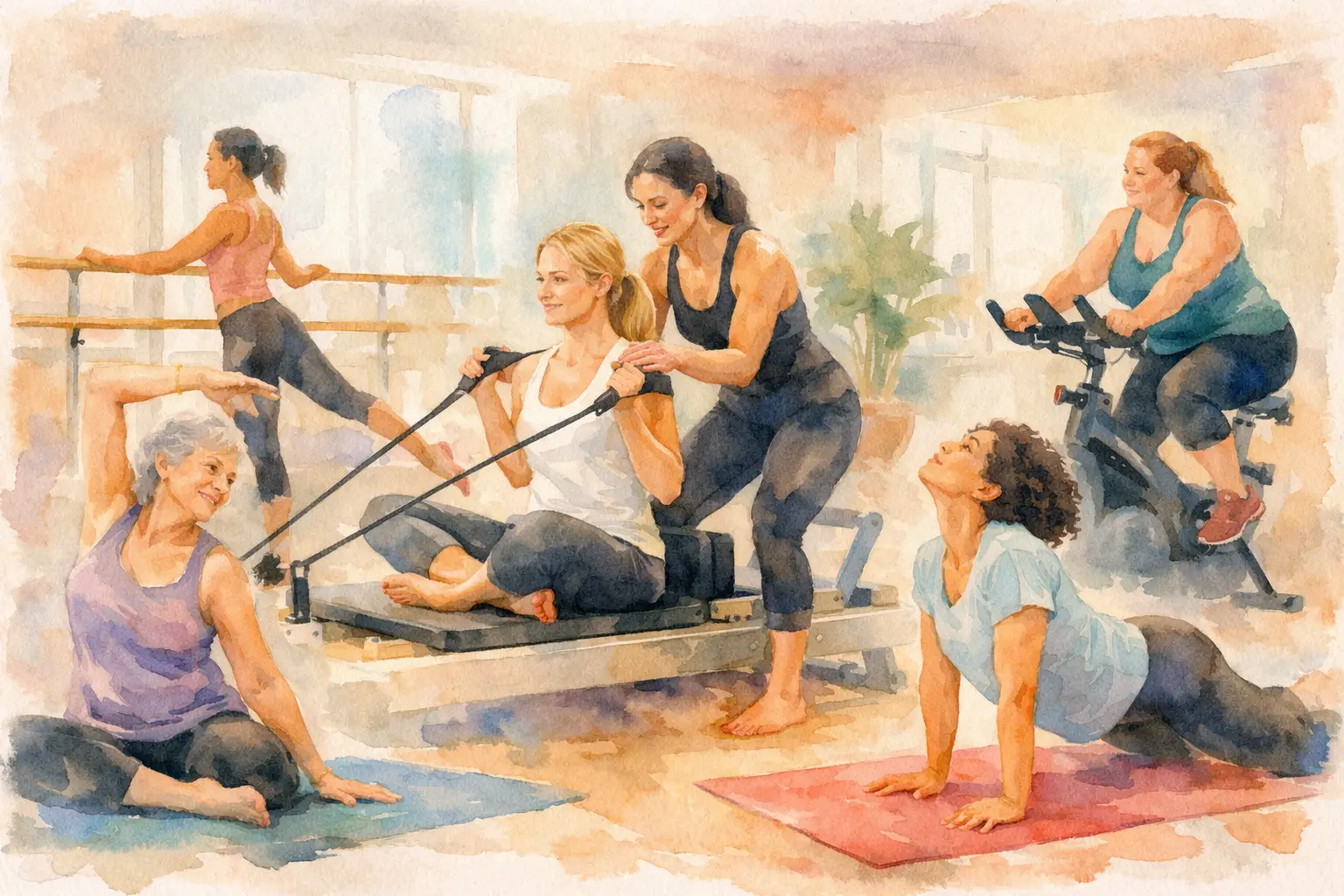
After a morning at a desk, a long drive down the coast, or an evening spent looking at a phone, many of us notice the same thing: shoulders creeping forward, a stiff upper back, and a core that has quietly checked out. Posture is not about forcing yourself into a rigid, military-style stance. It is about building the strength, mobility, and awareness to feel supported in the positions that fill your real life.
The best exercises to improve posture do more than pull the shoulders back. They teach your core, upper back, hips, and feet to work together. With consistent, low-impact practice, you may feel more upright in class, more comfortable moving through your day, and more confident in how you carry yourself.
Healthy alignment is active, but it should not feel tense. Think of your ribs stacked gently over your pelvis, your shoulders resting away from your ears, and the back of your neck long. Your weight should feel balanced through both feet rather than shifted into one hip or dumped into your heels.
There is no single perfect posture to hold all day. Bodies are built differently, and pregnancy, past limitations, work setups, and daily habits all affect what feels best. The goal is not to stay frozen in one position. It is to have enough strength and mobility to return to a supported position after you have been sitting, carrying groceries, cycling, or moving through a busy day.
Move slowly through these exercises two or three times each week. Quality matters more than making each movement bigger. If anything causes sharp pain, stop and choose a smaller range of motion or ask a qualified instructor for guidance.
Stand with your back near a wall and place your feet a few inches forward. Let the back of your head and upper back lightly meet the wall. Your lower back will have a natural space behind it, so there is no need to flatten it completely.
Take a breath in, then exhale as you gently draw your ribs down and lengthen through the crown of your head. Hold for three to five calm breaths. This simple check helps you notice when the ribs are flaring forward or the chin is reaching out, two common habits that can make posture feel strained.
A forward head position often shows up after screen time, reading, or driving. Chin tucks are a small movement with a big awareness benefit. Sit or stand tall, keeping your gaze level. Glide your chin straight back as though you are making a gentle double chin, without tipping your head down.
Pause for a breath, then release. Try eight to 10 slow repetitions. Keep your shoulders relaxed. The movement is subtle, and that is the point. You are practicing length through the neck rather than forcing the head backward.
Come to hands and knees with wrists under shoulders and knees under hips. Inhale as you broaden across your collarbones and gently lift your chest and tailbone. Exhale as you press the floor away, round through the upper back, and allow your head to follow naturally.
Repeat for six to eight easy cycles. Cat-cow brings movement to the spine after long periods of sitting, while the breath encourages you to avoid gripping through the shoulders. Keep the motion comfortable rather than trying to create the deepest possible arch or round.
Bird dog is a core-strengthening favorite because it challenges stability without high impact. From hands and knees, reach your right arm forward and extend your left leg back. Keep your hips level and imagine balancing a glass of water across your low back.
Return with control, then switch sides. Aim for six to eight repetitions per side. If lifting both limbs feels unsteady, begin by moving one arm or one leg at a time. A steady core gives the rest of the body a more reliable base for standing tall.
Your hips play a quiet but essential role in posture. When the glutes are not contributing, it is easy to overwork the low back or settle into the front of the hips. Lie on your back with knees bent, feet about hip-width apart, and arms by your sides.
Exhale and press through your feet to lift your hips until your body makes a comfortable line from shoulders to knees. Pause at the top without arching the ribs, then lower slowly. Complete 10 to 12 repetitions. Focus on feeling the work through the backs of the legs and seat, not just the low back.
Lie on your back and bring your arms toward the ceiling with knees bent over hips. On an exhale, lightly draw your ribs toward the floor and tap one heel down, then bring it back to center. Alternate sides for eight to 10 repetitions each.
This exercise builds deep core control while helping you practice rib and pelvis alignment. If your back starts to lift or you feel yourself straining, make the movement smaller. That adjustment is not a shortcut. It is smart form.
Lie on your stomach with your forehead resting on a folded towel if needed. Bend your elbows and place your arms in a W shape, with elbows slightly below shoulder height. Gently draw your shoulder blades down and toward each other as you lift your hands and chest just a few inches from the floor.
Hold for one breath, then lower with control. Try six to 10 repetitions. This is not a test of how high you can lift. It is an opportunity to wake up the upper-back muscles that support open, relaxed shoulders.
Step one foot forward into a comfortable low lunge, with the back knee down or lifted depending on your balance and comfort. Tuck the pelvis slightly until you feel a gentle stretch through the front of the back hip. Reach the arm on the same side as the back leg overhead and slightly to the opposite side.
Hold for three to five breaths, then switch sides. Sitting can leave the front of the hips feeling shortened, which may influence how you stand and walk. This stretch creates space while the glutes and core work on providing support.
You do not need an hour-long workout to make posture-focused movement worthwhile. A 10-minute sequence can be enough: begin with cat-cow, move into bird dog and glute bridges, then finish with a low lunge and wall posture check. The most effective routine is the one you can repeat.
It also helps to build small alignment resets into your day. Stand up between tasks, let your arms swing as you walk, place both feet on the floor during calls, and take a few full breaths before settling back into your chair. These moments reinforce the work you do in class or at home.
Barre, Pilates-inspired strength work, and yoga can be especially helpful because they pair muscle endurance with intentional alignment. At Sea Barre Fitness, instructors can offer form cues and options that meet you where you are, whether you are returning to movement, building a consistent routine, or ready for a new challenge.
“Shoulders back” is common advice, but it can lead to over-squeezing the shoulder blades and puffing the ribs forward. Instead, try thinking “shoulders soft and wide” or “collarbones broad.” You want support, not stiffness.
Likewise, avoid clenching your stomach all day. Your core should respond to movement and breath, not stay braced from morning to night. Exhale gently during the effort of an exercise, then allow your body to soften when the effort is over.
Posture changes gradually because it reflects patterns, not a single workout. Give yourself credit for the small wins: noticing your chin drifting forward, choosing a movement break, or feeling more stable in a plank. Each repetition is a reminder that strong, confident posture can be practiced, one supported breath at a time.
Are barre socks necessary? Learn when grip socks help with stability and hygiene, when they are required, and how to choose a comfortable pair for class.
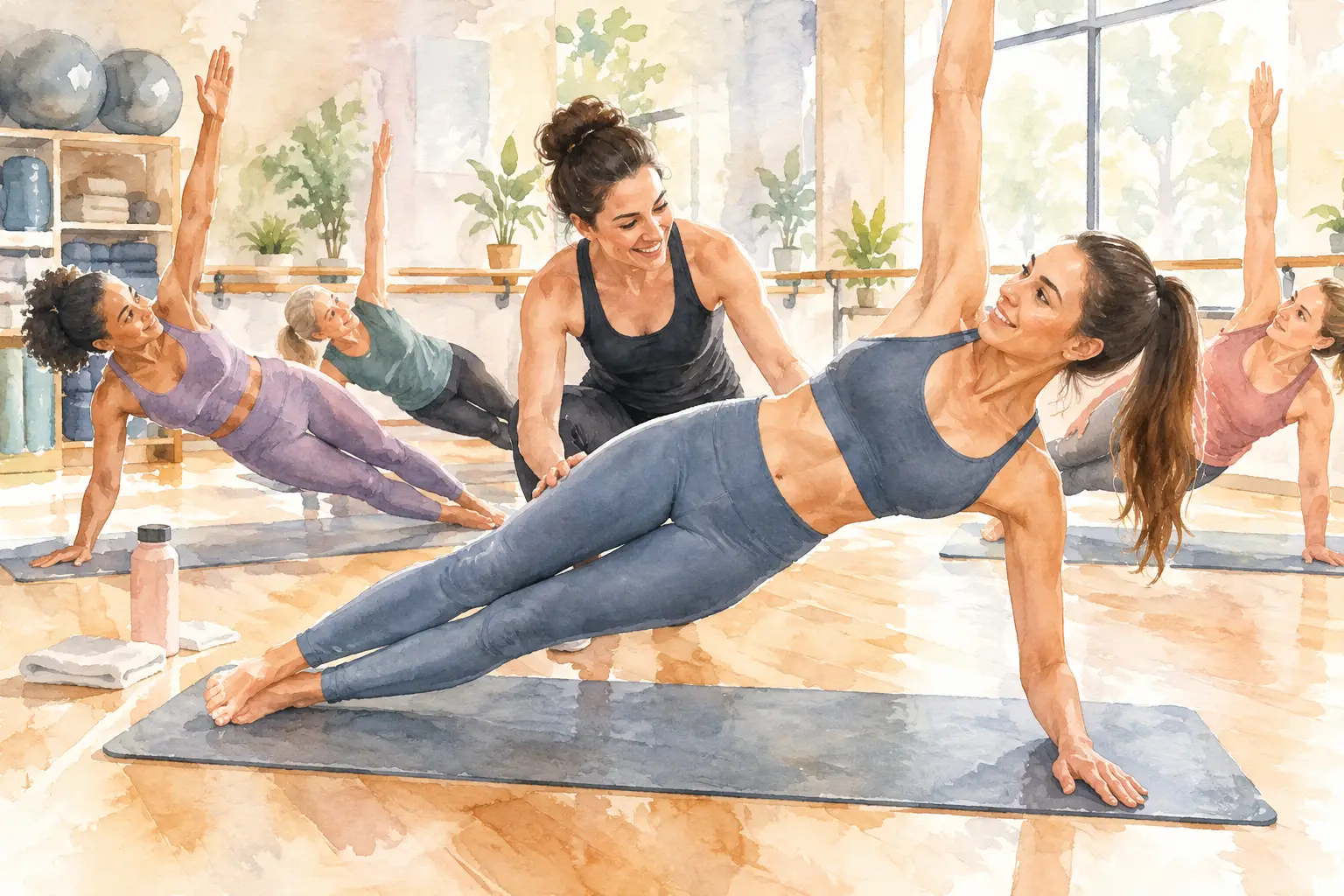
Find the best core stability moves for stronger posture, better balance, and confident low-impact movement, with form tips for every fitness level at home.