
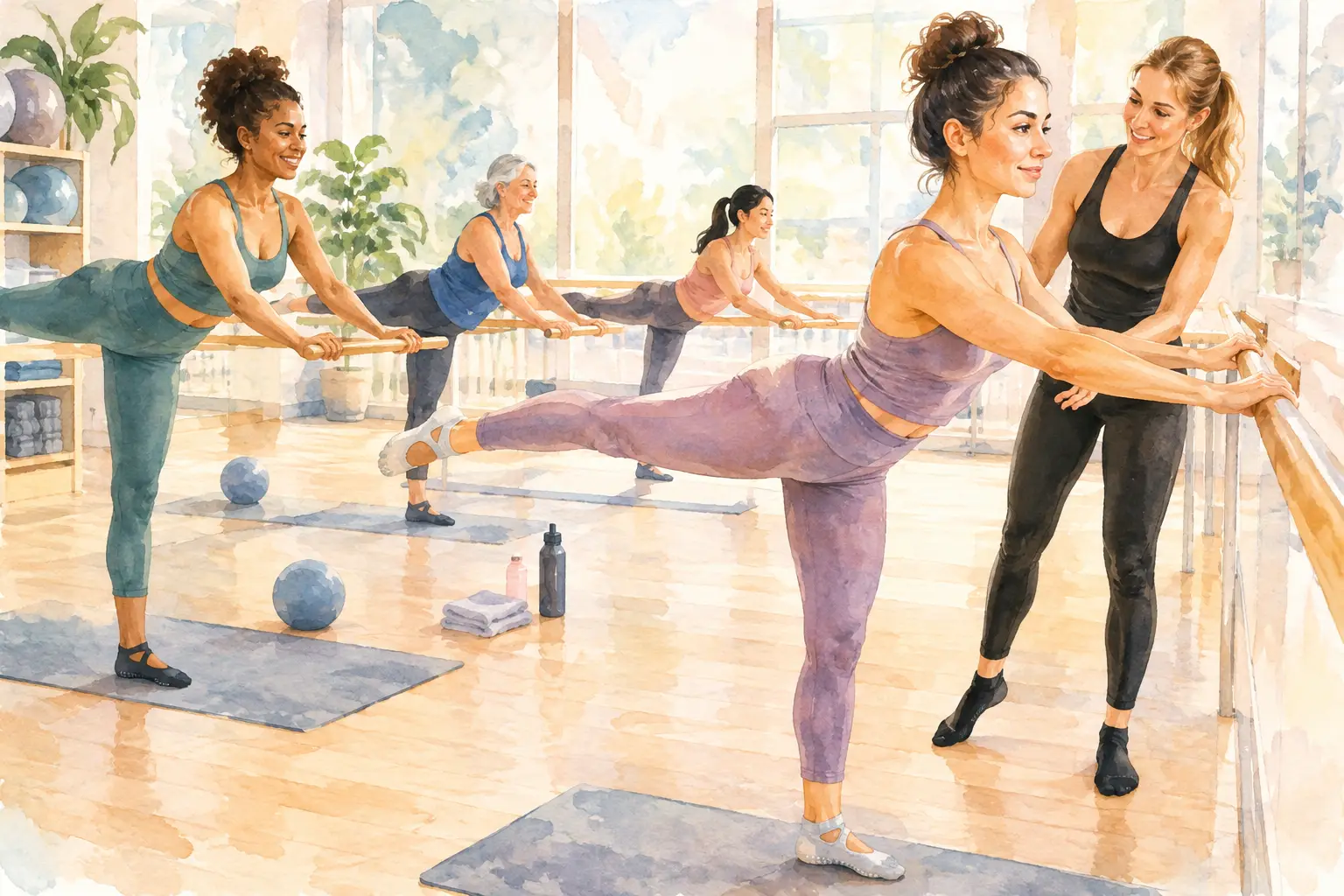
Are Barre Socks Necessary for Every Class?
Are barre socks necessary? Learn when grip socks help with stability and hygiene, when they are required, and how to choose a comfortable pair for class.
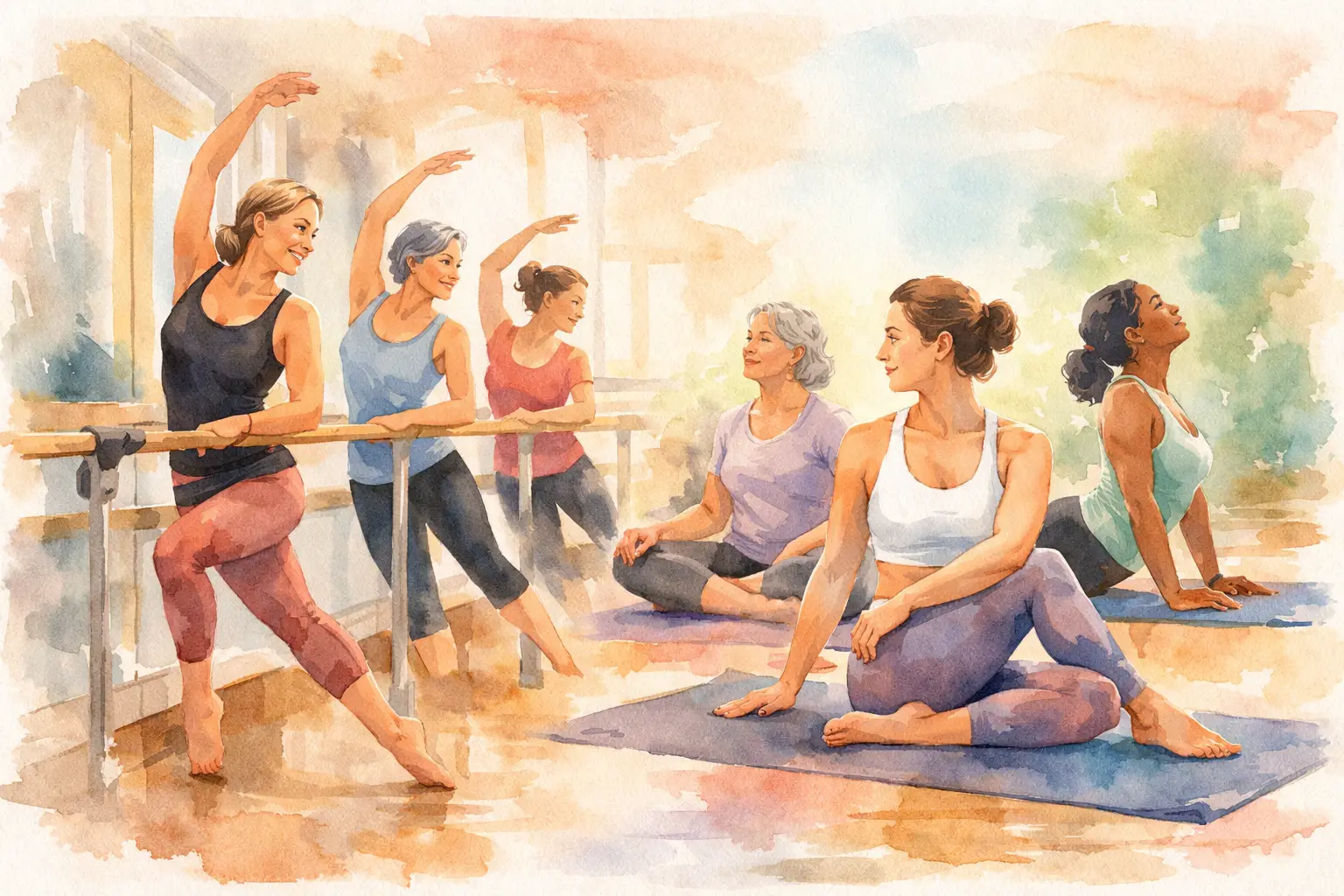
Your workout should fit the way you want to feel when you walk out the door. This yoga barre comparison helps make that choice clearer: yoga and barre are both low-impact, full-body formats, but they create strength, mobility, and energy in different ways. One may be the reset your body needs. The other may give you the focused muscle work that makes everyday movement feel stronger.
Neither class requires you to arrive flexible, coordinated, or already in great shape. With supportive coaching and room to work at your own level, both can become a lasting part of a routine that feels good to maintain.
Yoga is centered on breath, purposeful poses, flexibility, balance, and the connection between movement and presence. A class may move steadily through flowing sequences or spend more time in shapes that invite you to slow down, lengthen, and notice how your body feels. You will build strength along the way, especially through standing poses, planks, and balances, but the experience is often guided by mobility and mindful movement.
Barre uses small, controlled movements to challenge muscles with precision. Expect a blend of standing work at the barre, core training, mat exercises, and stretches. The movements may look simple, but holding a position or repeating a small range of motion can create a serious challenge for the legs, seat, core, and arms without jumping or heavy impact.
In short, yoga often asks, “How can I move with more ease?” Barre often asks, “How can I build more stability and control?” Both questions matter. The right answer depends on what your body and schedule need most right now.
Yoga is a strong choice when you want to create space in a busy week. The focus on breath can help you transition out of a rushed workday, while the poses encourage mobility through the hips, shoulders, spine, and hamstrings. Over time, regular practice can support better body awareness, balance, posture, and confidence in how you move.
Do not mistake yoga for an “easy” workout. A well-taught class can challenge your core, legs, arms, and balance in a thoughtful way. The challenge is simply different from fast-paced cardio or high-impact exercise. You may hold a pose long enough to feel your muscles working, then move into a stretch that asks you to release unnecessary tension.
Yoga can be especially appealing if you spend long stretches sitting, feel stiff after travel, or want a practice that leaves you grounded rather than drained. It is also a helpful complement to other movement you enjoy, including cycling, walking, barre, and Pilates-inspired training.
The trade-off is that yoga may not always provide the concentrated muscular fatigue some people want from a strength-focused studio class. If your goal is to feel your legs and core working deeply in every session, barre may feel more immediately satisfying. Many clients find that yoga gives their barre work more range and comfort, while barre gives their yoga practice more stability.
You may feel at home in yoga if your goals include improving flexibility, moving with more ease, practicing balance, or making room for stress relief in your routine. It is also a welcoming place to begin if exercise has been on pause for a while. A coach can offer options that help you meet the class where you are, not where you think you should be.
Barre is built around intentional repetition. You might work through a squat variation, hold a standing position, pulse through a small movement, then shift to a different muscle group before returning to the mat for core work. The details matter: the angle of your hips, the placement of your feet, the way you support your spine, and the quality of each repetition.
That is why instructor guidance is so valuable in barre. A small adjustment can help you feel the exercise in the intended place and work with more confidence. Rather than trying to muscle through a movement, you learn how to create effort while staying aligned and supported.
Barre is known for helping participants develop muscular endurance, core strength, posture, balance, and a strong sense of connection to their bodies. Because the format is low impact, it can offer a challenging workout without requiring jumps or hard landings. You may leave with legs that feel wonderfully worked, a stronger awareness of your core, and the kind of energy that comes from showing up for yourself.
The trade-off is that barre is less focused on long, flowing stretches than yoga. Classes include stretching, but the primary purpose is targeted strength and control. If you are feeling especially tight or craving a quieter, slower pace, yoga may be the better choice that day.
Choose barre when you want to strengthen your legs, seat, arms, and core through low-impact movement. It is a wonderful option for anyone who likes clear structure, encouraging accountability, and the feeling of working hard in a welcoming room. Beginners can take modifications, while experienced participants can refine the same movements with more depth and control.
The best yoga barre comparison is not about choosing a winner. It is about recognizing how the formats can support different parts of your week.
A barre class can be the appointment that helps you feel powerful, upright, and connected to your muscles. Yoga can be the class that helps you breathe deeper, restore mobility, and reset your mindset. On weeks when you have more energy, you might enjoy barre two or three times and add yoga to keep your body moving comfortably. On a demanding week, yoga may be the consistent choice that keeps your routine intact.
Your preferences matter, too. Some people love the precision and upbeat focus of barre. Others look forward to the flow and breathing rhythm of yoga. You do not need to force yourself into the format that sounds best on paper. The class you will return to is the class that can create real momentum.
If stronger posture and targeted muscle endurance are at the top of your list, start with barre. The repeated attention to core support, hip stability, and alignment can carry into standing, walking, and daily movement.
If flexibility, balance, and a calmer relationship with movement are your biggest priorities, begin with yoga. You will still develop strength, but with more time devoted to lengthening, breathing, and moving through a full range of motion.
If you want both, there is no need to overthink it. Try one class of each within the same couple of weeks. Notice what feels challenging, what feels energizing, and what makes you want to come back. Your goals can change with the seasons, your work schedule, or a new life stage, and your fitness routine can change with them.
For clients who are pregnant, returning after a break, or working around physical limitations, communication is key. Let your instructor know before class so they can help you choose appropriate options and create a comfortable experience. At Sea Barre Fitness, the goal is never to keep up with someone else. It is to build your own strong, sustainable practice.
Wear clothing that lets you move comfortably, bring water, and arrive a few minutes early if you can. You do not need special experience to try yoga or barre. You only need a willingness to listen to your body and let the instructor guide you.
Give yourself more than one class before making a decision. The first visit is often about learning the room, the vocabulary, and the rhythm of the format. By the second or third class, the movements begin to feel more familiar, and that is when you can better notice your own progress.
Choose yoga when you want to reconnect with your breath and mobility. Choose barre when you want precise, low-impact strength work. Choose both when you want a routine that meets you with exactly what you need, one class at a time.
Are barre socks necessary? Learn when grip socks help with stability and hygiene, when they are required, and how to choose a comfortable pair for class.
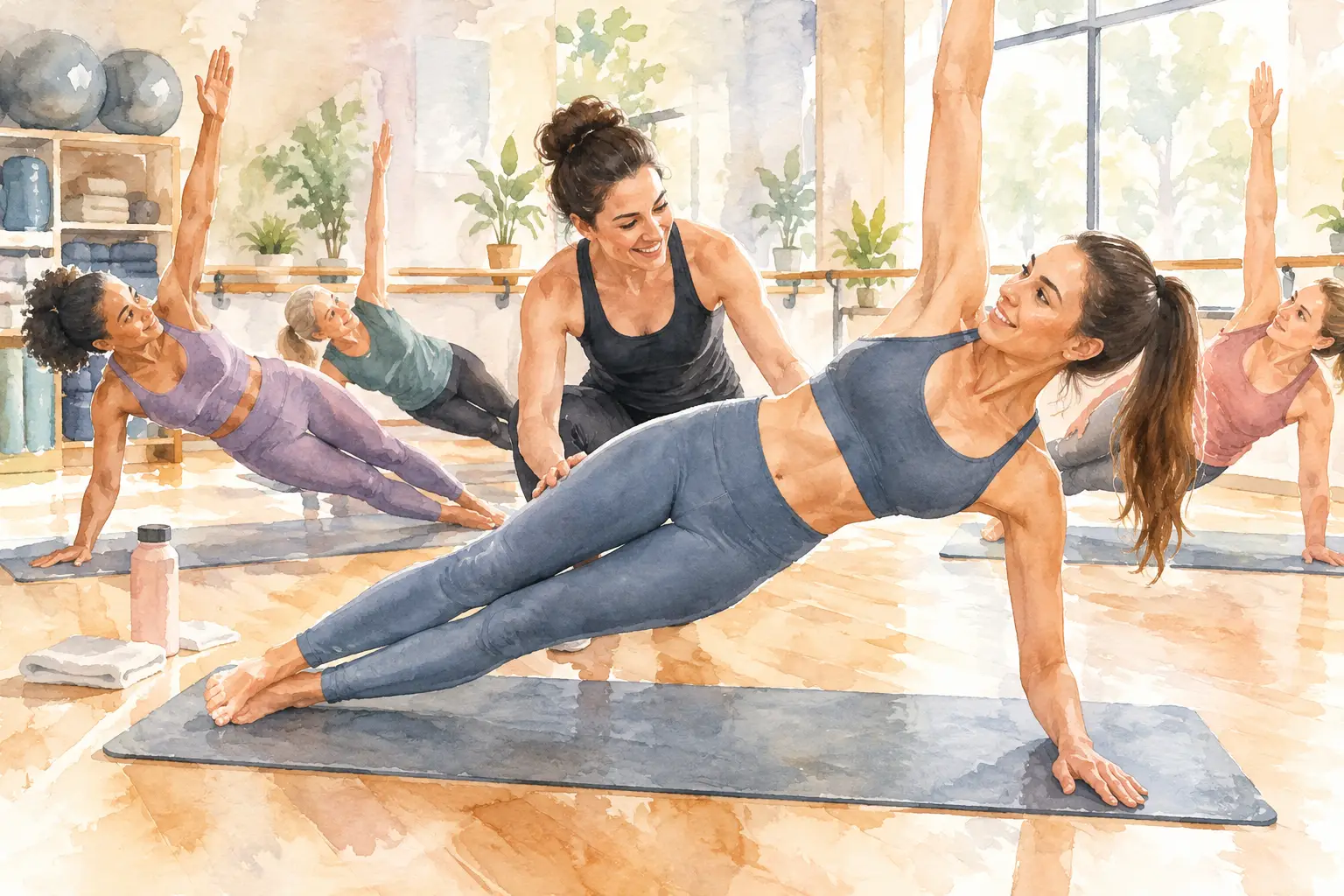
Find the best core stability moves for stronger posture, better balance, and confident low-impact movement, with form tips for every fitness level at home.