
Are Barre Socks Necessary for Every Class?
Are barre socks necessary? Learn when grip socks help with stability and hygiene, when they are required, and how to choose a comfortable pair for class.
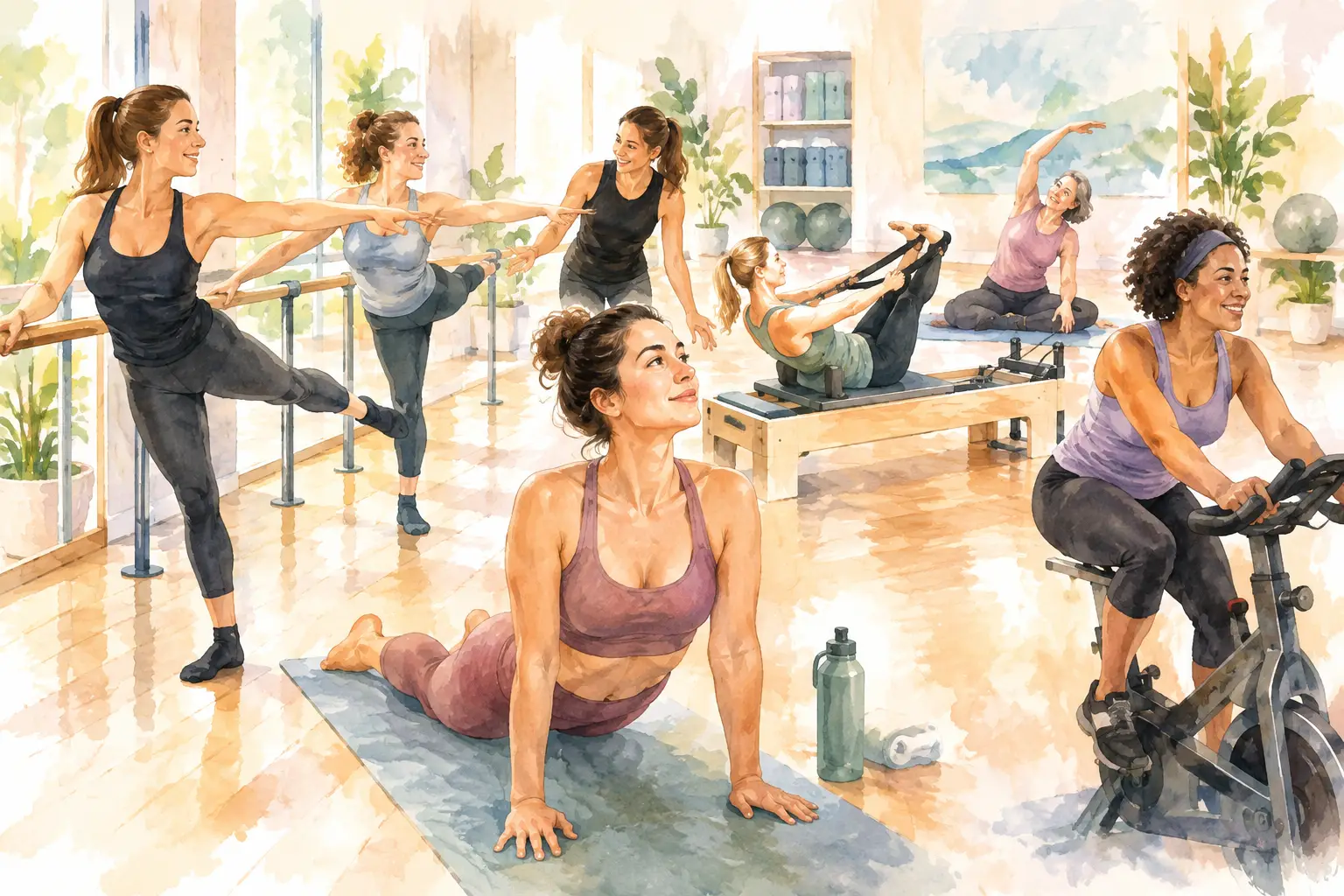
That first workout can feel like a bigger commitment than it really is. You may be wondering whether you will know what to do, keep up with the room, or feel sore for days afterward. The best beginner workout options remove that pressure. They give you clear guidance, room to learn, and a way to feel stronger without asking your body to do too much too soon.
A sustainable routine is rarely about finding the hardest class. It is about finding movement you enjoy enough to return to, instructors who help you feel capable, and a schedule that works with real life. Low-impact strength, mobility, and cardio classes can meet you exactly where you are while still offering the satisfying challenge that helps you build momentum.
Beginner-friendly does not mean easy or watered down. It means the workout has a clear structure, a coach who offers form cues and modifications, and movement that can be adjusted as your confidence grows. You should be able to take breaks when needed without feeling like you have failed the class.
Look for workouts that help you build foundational skills: how to engage your core, align your posture, move with control, and notice the difference between a productive challenge and discomfort that signals you should pause. These details matter. Good form makes each movement more effective and helps you feel more at home in your body.
Low-impact options are especially helpful for people returning to exercise after time away, those who prefer gentler training on their joints, and anyone who wants a balanced routine that supports strength and energy. You can work hard without jumping, pounding, or trying to prove anything.
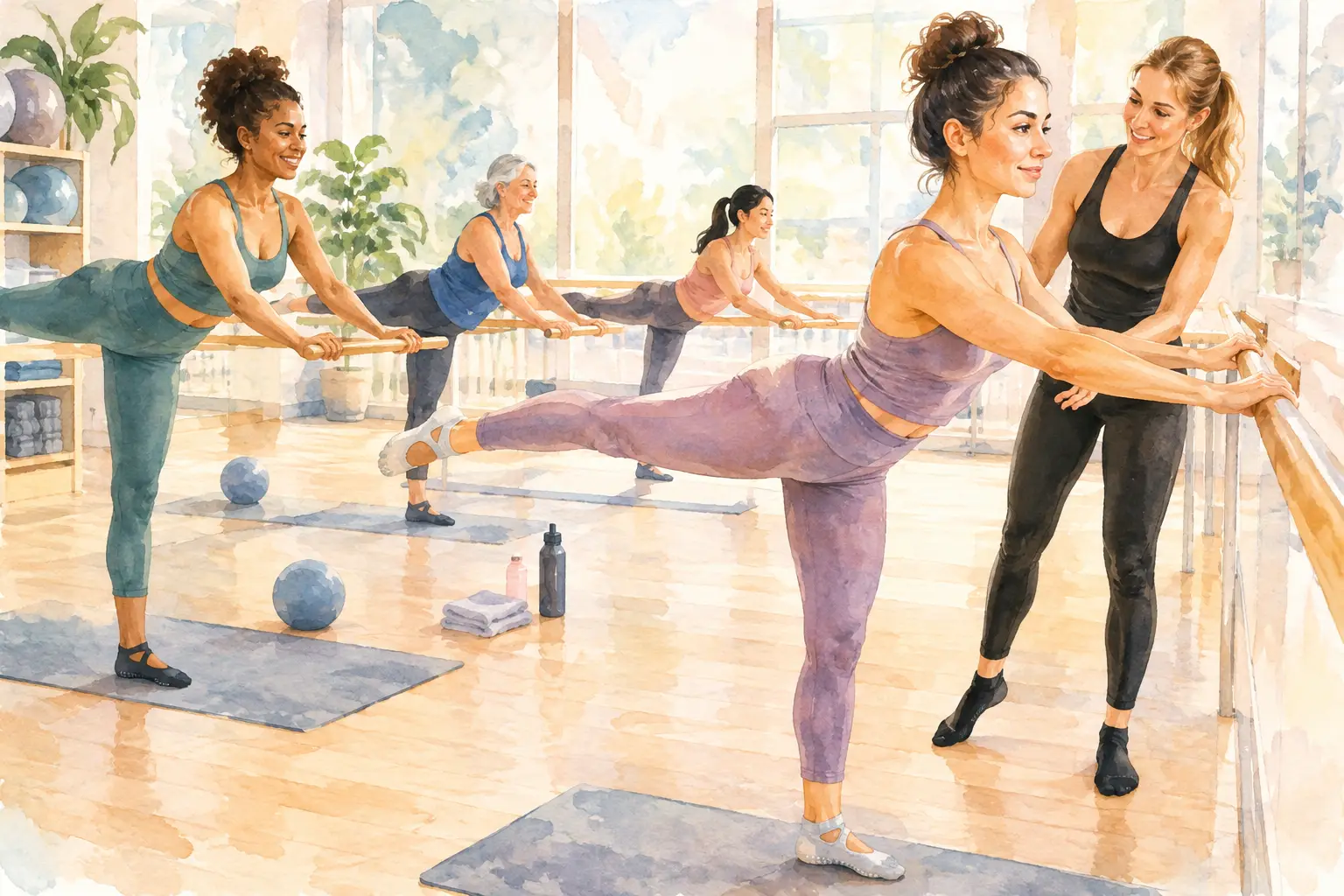
Barre is a smart place to begin if you want to feel your muscles working while keeping movements controlled and joint-friendly. Classes often combine small, intentional strength exercises with balance work, core engagement, and stretching. You may use a barre, light equipment, or your own body weight, but the focus stays on precision rather than heavy loads.
For beginners, barre offers a practical introduction to muscular endurance. The movements can look simple, yet they invite you to pay attention to your alignment, breathing, and stability. Over time, many people notice stronger legs and core muscles, improved posture, and more confidence in everyday movement.
It can take a few classes to become familiar with the positions and cues. That is normal. A supportive instructor can show you how to make an exercise smaller, adjust your stance, or take a brief reset while still helping you feel included.
Yoga is not about forcing yourself into complicated poses. For a beginner, it can be a welcoming way to improve flexibility, build balance, and learn how your body moves. A well-guided class connects breath with movement and gives you time to settle into each shape at your own pace.
Choose a class that welcomes modifications and encourages props when useful. Blocks, straps, and a steady pace can make poses more accessible, not less successful. If you spend much of the day sitting, yoga can be especially refreshing for opening the hips, shoulders, and spine while developing body awareness.
Some yoga classes are more flowing, while others are slower and more restorative. The right choice depends on what you need that day. If you are looking for a gentle start or a way to reduce stress, a slower format may feel best. If you want more continuous movement and warmth, a flow-based class may be a better fit.
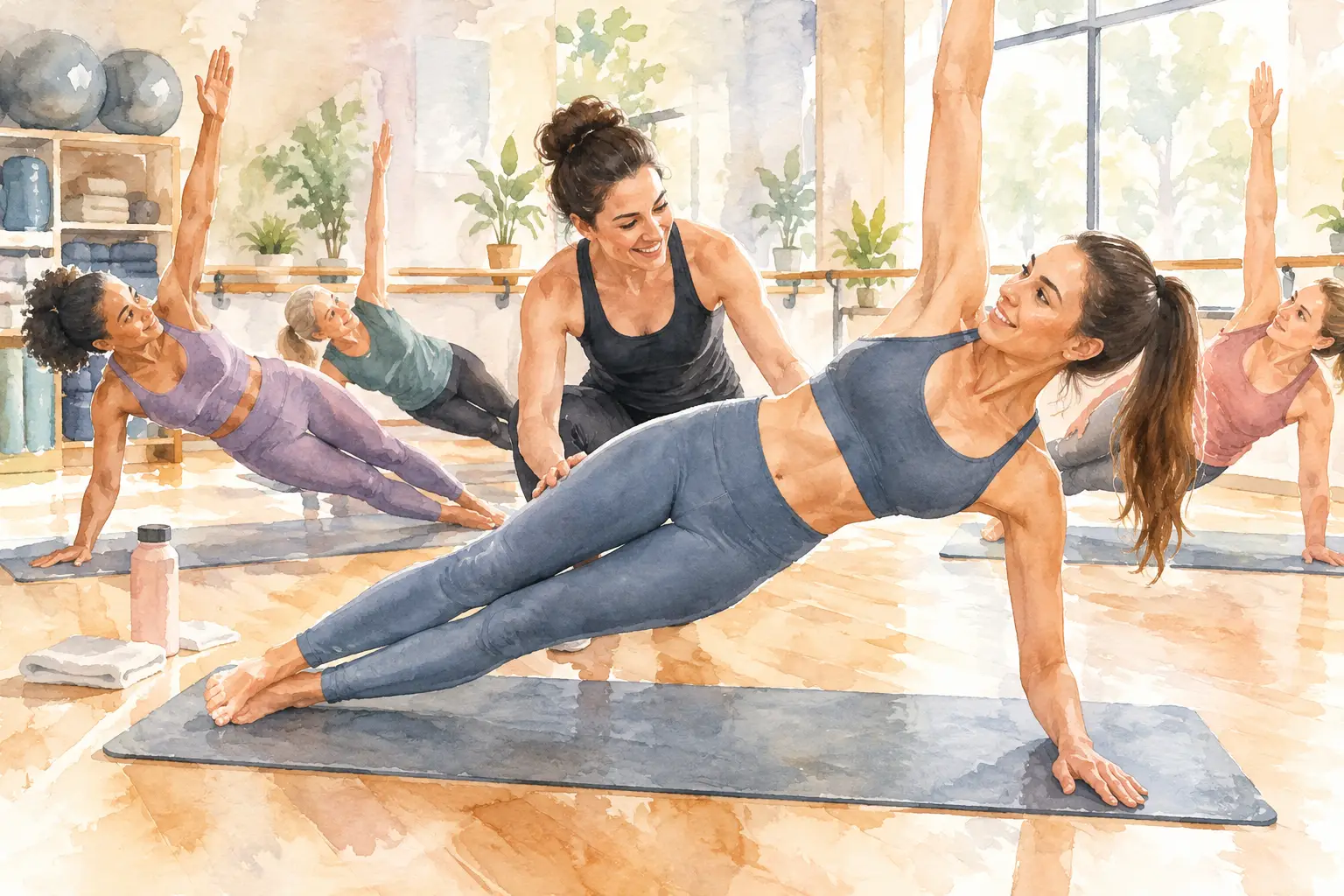
Pilates-inspired workouts are built around purposeful movement, core connection, posture, and stability. They are a great option for beginners who want to feel stronger from the inside out rather than simply chasing a higher heart rate.
Expect thoughtful exercises that challenge your abdominal muscles, glutes, back, and smaller stabilizing muscles. The pace may feel slower than a traditional gym workout, but that does not mean it lacks intensity. Controlled repetitions can be surprisingly challenging, especially when you are learning to keep your shoulders relaxed, ribs aligned, and core engaged.
This format works well alongside other activities because it builds the control and mobility that support daily life. It is also easy to scale. A coach can offer options that make a movement more approachable or more challenging as your strength changes.
If you miss the energizing feeling of a cardio workout but do not love running or jumping, indoor cycling can be a strong choice. Because the bike supports much of your body weight, cycling gives you a chance to build cardiovascular stamina with less impact on your joints.
Your first ride does not need to be about speed or resistance. Start by learning the bike setup, finding a comfortable posture, and riding at an effort level that lets you stay in control. Good instructors will cue the rhythm, offer options for resistance, and remind you that you are always allowed to ease back.
Cycling can also be a helpful confidence-builder because progress is easy to feel. A ride that once seemed demanding may later become your favorite way to reset your energy after a long day.
Group classes offer community and encouragement, but personal training can be the right starting point when you want more individual attention. A trainer can learn about your goals, movement experience, preferences, and any limitations you are navigating. From there, they can help you practice foundational exercises with focused feedback.
This option is particularly useful if you feel nervous about joining a class, want help creating a consistent plan, or simply prefer a quieter place to begin. Personal training does not have to be a permanent commitment. A few sessions can give you the confidence and familiarity to explore group formats later.
Start with your goal, but keep it simple. If you want to strengthen and tone while improving posture, try barre or Pilates-inspired training. If stress relief and flexibility are calling you, yoga may be the better fit. If building stamina is your priority, indoor cycling offers a focused cardio experience without high impact.
Then consider what will make you come back. Some people thrive on the shared energy of a group class. Others feel best starting with personal guidance. Morning classes may help you protect your workout time, while an evening session can become a welcome transition out of work mode. The ideal routine is the one that fits your life often enough to become familiar.
Before class, wear clothing you can move comfortably in, bring water, and arrive a little early if possible. Let the instructor know it is your first visit. At Sea Barre Fitness, coaches are there to guide your form, answer questions, and help you choose options that feel right for your body that day.
There is no prize for doing everything at once. For many beginners, two classes per week is a realistic place to start. It gives your body time to recover, lets you learn the movements, and creates a rhythm without turning fitness into another overwhelming item on your calendar.
You might pair a strength-focused barre or Pilates-inspired class with yoga for mobility, or combine cycling with a class that supports core strength and posture. After a few weeks, notice what has changed beyond the scale. Maybe you stand taller, climb stairs with more ease, sleep better, or feel less hesitant about trying a new class. Those are meaningful signs that your routine is working for you.
Give yourself permission to be new. Take the modification, ask the question, and celebrate showing up before you worry about doing everything perfectly. The class that feels unfamiliar today may soon become the hour of your week when you feel strongest, most supported, and most like yourself.
Are barre socks necessary? Learn when grip socks help with stability and hygiene, when they are required, and how to choose a comfortable pair for class.
Find the best core stability moves for stronger posture, better balance, and confident low-impact movement, with form tips for every fitness level at home.