
Are Barre Socks Necessary for Every Class?
Are barre socks necessary? Learn when grip socks help with stability and hygiene, when they are required, and how to choose a comfortable pair for class.
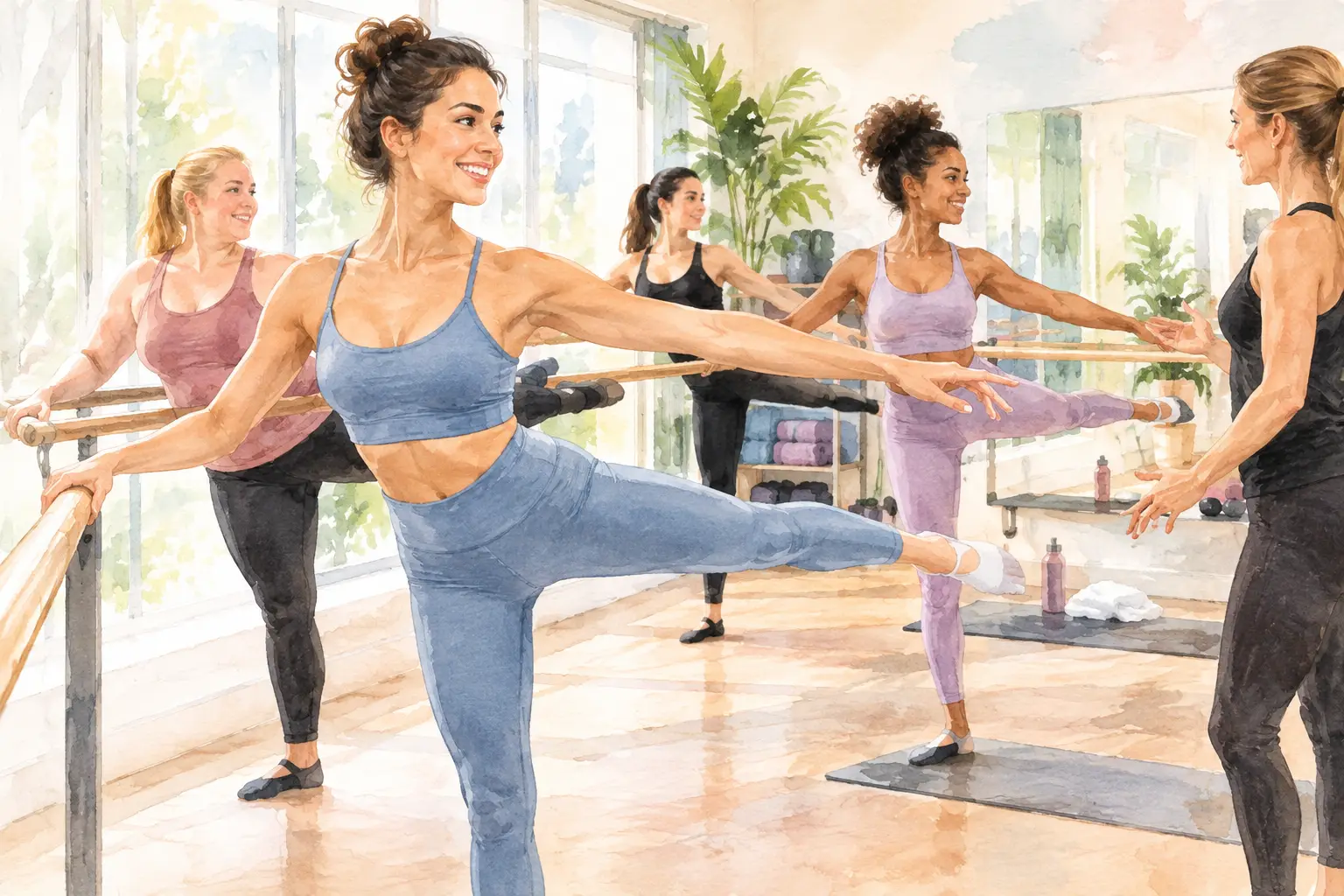
The right barre outfit should let you focus on your tiny pulses, deep stretches, and stronger posture – not on pulling up a waistband or wondering whether your top will stay put. If you are deciding what to wear to barre class, think comfortable, flexible, and supported. You do not need a matching set or a closet full of fitness clothes to feel at home at the barre.
Barre is high-intensity, low-impact movement that asks your body to work with control. You may move from standing work at the barre to planks, core exercises on a mat, and stretches that open through the hips and shoulders. Clothing that moves with you makes that experience more comfortable and lets your instructor see your alignment when offering helpful guidance.
For most people, a fitted tank, tee, or long-sleeve top paired with leggings is an easy, dependable choice. Look for soft, breathable fabric with enough stretch for squats, lunges, side bends, and floor work. Your clothes should feel secure without feeling restrictive.
A more fitted top is often preferable to a loose, oversized shirt. During planks, forward folds, and exercises on your back, a billowy shirt can shift around and become distracting. That does not mean you need to wear anything revealing. A comfortable, close-to-the-body tee or tank gives you coverage while helping you move freely.
For bottoms, leggings, capris, or fitted bike shorts all work well. Many clients prefer high-rise leggings because they stay in place during core work and allow for a full range of motion. Choose an opacity and fit that help you feel confident when you bend, stretch, and lift a leg at the barre.
The best outfit is the one you can forget about once class begins. If you can inhale deeply, raise your arms overhead, squat comfortably, and hold a plank without adjusting anything, you are ready.
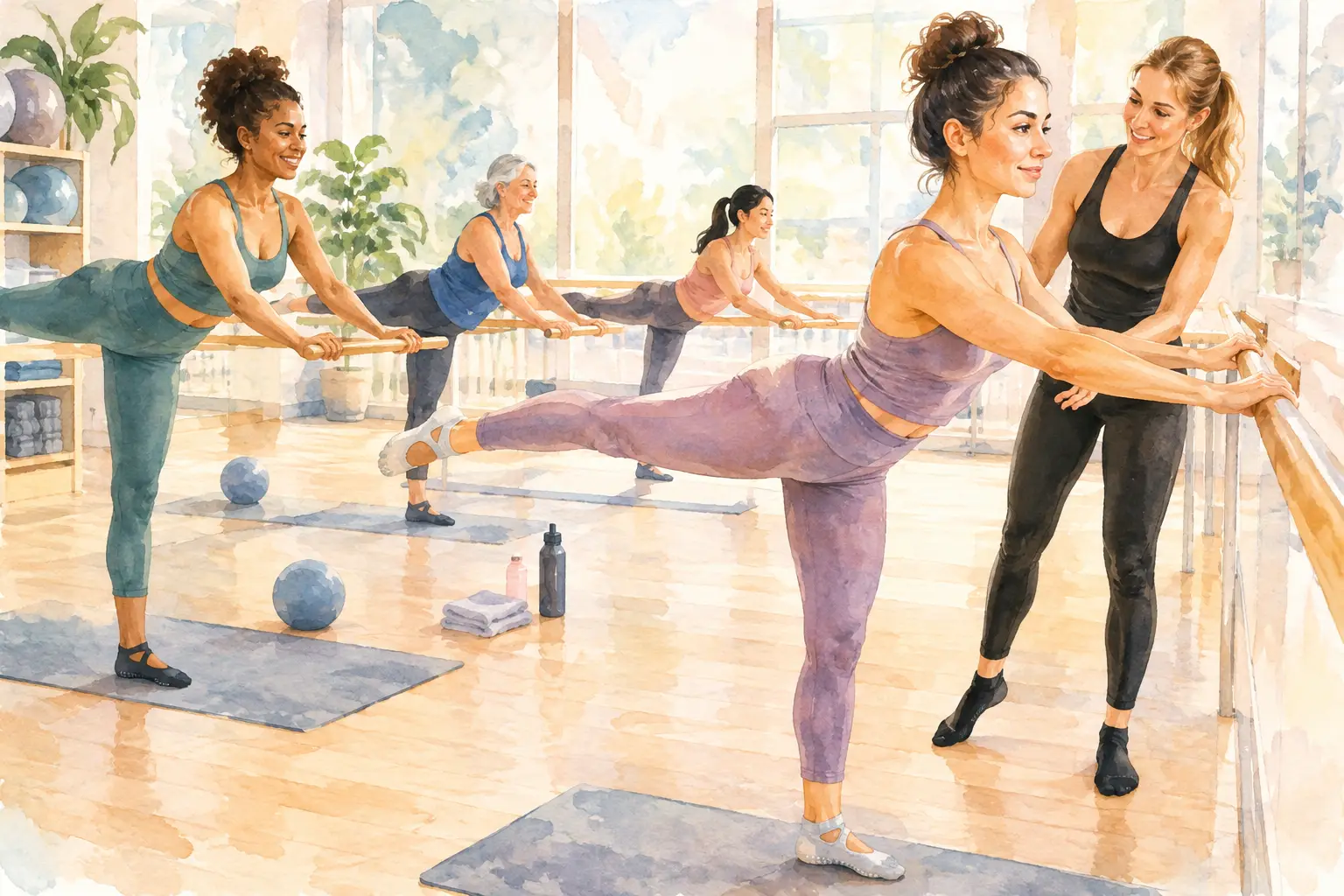
Barre is typically done in grip socks rather than sneakers. The small grips on the sole help you feel grounded through your feet while moving on the studio floor or mat. They also allow you to articulate through your toes and work the smaller stabilizing muscles that support balance.
If you already own grip socks from Pilates, those will usually be a great option. Some people like full-coverage socks, while others prefer open-toe or ballet-inspired styles. Fit matters more than style: your socks should stay snug at the heel and not bunch under your toes.
Studio policies can vary, so check ahead if you are unsure whether grip socks are required or available for purchase. Bringing a clean pair in your bag is an easy first-class win.
Barre includes controlled strength work, balance, and low-impact cardio intervals, but it is not a one-size-fits-all experience. The amount of support you prefer depends on your body, your comfort level, and the type of class.
A supportive sports bra can help you feel comfortable through arm sequences, planks, and dynamic standing work. Many clients choose light- to medium-support styles for barre. If you prefer more coverage or support, wear what makes you feel most at ease. Confidence is part of showing up for yourself.
If you are pregnant, returning to movement after time away, or managing changing comfort needs, flexible waistbands and soft fabrics can make a meaningful difference. There is no prize for wearing something tight or trendy. Choose pieces that allow you to breathe, move, and receive modifications comfortably.
It is common to feel cool when you first arrive, especially during an early-morning class or after a breezy Delaware beach day. A lightweight zip-up, wrap, or long-sleeve layer is a smart addition to your barre outfit. You can wear it during the warm-up, then set it aside once your body is warm.
Layers are also useful after class. Your muscles may feel pleasantly worked, and having a dry, comfortable layer to pull on makes it easier to head into the rest of your day feeling refreshed.
Avoid very bulky sweatshirts or jackets that limit shoulder movement if you plan to keep them on. Barre uses intentional arm work, and you want to be able to reach, pulse, and lengthen without fabric getting in the way.
There are very few hard rules, but a few clothing choices can make class less comfortable. Sneakers are generally not needed for traditional barre work because they limit foot mobility and can feel clunky on a mat. Loose shorts may ride up during floor exercises, while stiff fabrics can make pliés and stretches feel unnecessarily difficult.
Very loose tops can also shift during inversions or planks. Jewelry that catches, swings, or presses into your skin during mat work may be better left at home. If you wear long hair down, bring a hair tie or clip so you can keep your attention on your movement and breath.
Most of all, skip anything you are worried about damaging. Barre can be sweaty, and you will likely spend time on the floor, at the barre, and moving through a full range of motion. This is a class for working, not for standing still and looking perfect.
You can keep your first-class packing simple. Bring water, grip socks, and a hair tie if you use one. A small towel can be nice if you tend to sweat, and a light layer is helpful for coming and going.
Many studios provide the larger equipment used in class, such as mats, balls, bands, and light weights. If you are attending Sea Barre Fitness for the first time, arrive a few minutes early so your instructor can welcome you, show you where to settle in, and help you feel prepared. You do not need prior barre experience to belong in the room.
Barre clothing is often marketed with a narrow picture of who belongs in a studio. That picture is not the point. Your outfit does not need to look a certain way to support a strong class.
Wear the size that fits your body now. Choose colors and cuts that make you feel like yourself. Some people feel energized in bright matching sets; others feel best in black leggings and a favorite soft tee. Both are completely right.
A supportive studio should make space for every starting point, whether you are building a new routine, seeking joint-friendly strength work, or returning to exercise after a long break. Your instructor is there to coach your form and offer options, not to judge your outfit or your experience level.
If your schedule includes more than one format, your barre outfit may carry you through yoga or Pilates-inspired classes beautifully. Stretchy leggings, a secure top, and grip socks are versatile across many low-impact studio sessions.
Indoor cycling is the main exception. For cycling, you may prefer a more supportive sports bra, moisture-wicking top, and sneakers. If you are stacking classes, packing a second pair of shoes and an extra layer can make the transition easier.
For a heated or especially active barre class, lighter moisture-wicking fabrics may feel best. For a slower, mobility-focused session, you might appreciate soft long sleeves and cozy layers. Let the class style, room temperature, and your own comfort guide the choice.
There is no special uniform required before you take your first plié. Start with leggings or fitted shorts, a top that stays in place, supportive undergarments if you want them, and grip socks. Then let the class do what it is meant to do: help you build strength, improve balance, and leave feeling more connected to your body.
Wear what helps you walk through the studio door with ease. The rest begins one small pulse, one steady breath, and one encouraging class at a time.
Are barre socks necessary? Learn when grip socks help with stability and hygiene, when they are required, and how to choose a comfortable pair for class.
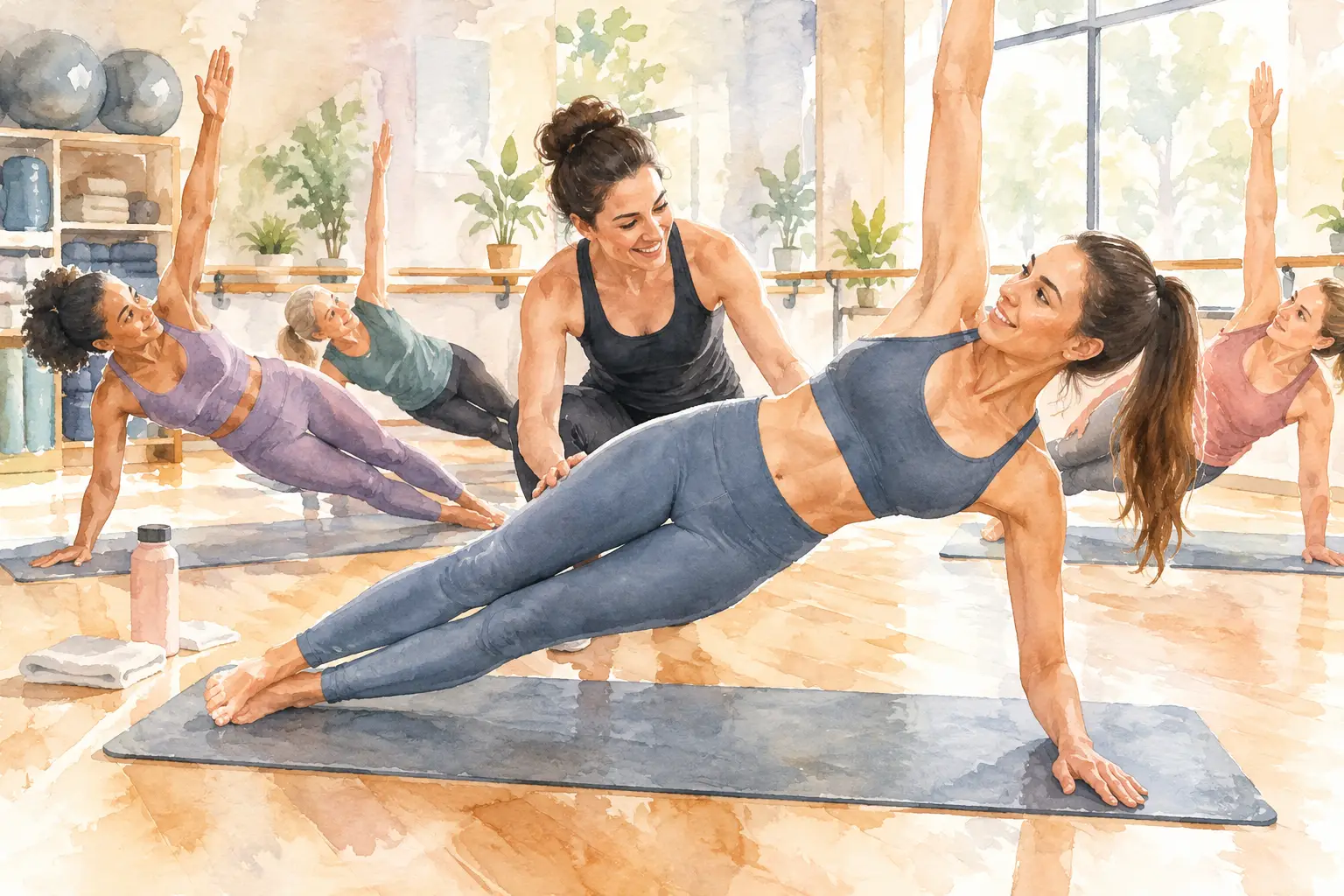
Find the best core stability moves for stronger posture, better balance, and confident low-impact movement, with form tips for every fitness level at home.